
What Is Offside in Soccer? The Rule Explained Clearly
Learn what offside means in soccer, when a player is penalized, how the second-last defender matters, and why some passes do not result in an offside call.
Offside in soccer is an attacking position rule designed to prevent players from waiting close to the opponent’s goal for an easy pass. A player is not penalized simply for standing in an offside position. The offense occurs only when that player becomes involved in active play.
How the offside rule works
A player is in an offside position if, at the moment a teammate plays or touches the ball, any part of the player’s head, body, or feet is:
- In the opponents’ half of the field;
- Closer to the opponents’ goal line than the ball; and
- Closer to the goal line than the second-last opponent.
The hands and arms are not considered when judging offside. The halfway line also cannot be used to place a player offside, so a player level with or behind the halfway line is onside.
The second-last opponent is usually the last outfield defender because the goalkeeper is often the final player between the attacker and the goal. However, the rule does not specifically refer to the goalkeeper. Any two opponents can determine the offside line.
When does an offside position become an offense?
Being beyond the defenders is only an offside position. The referee penalizes the player if they become involved in active play by doing one of the following:
- Interfering with play: touching or playing the ball passed by a teammate.
- Interfering with an opponent: blocking an opponent’s view, challenging for the ball, making an obvious action that affects an opponent’s ability to play it, or clearly obstructing an opponent’s line of movement.
- Gaining an advantage: playing the ball after it rebounds from the goal frame, an opponent, or a goalkeeper following a save or deliberate attempt to stop the ball.
The key timing point is the instant the teammate plays or touches the ball. A player may move back onside afterward, but that does not erase an offside offense if they were in an offside position and then became involved in that phase of play.
Examples of offside and onside situations
Typical offside example
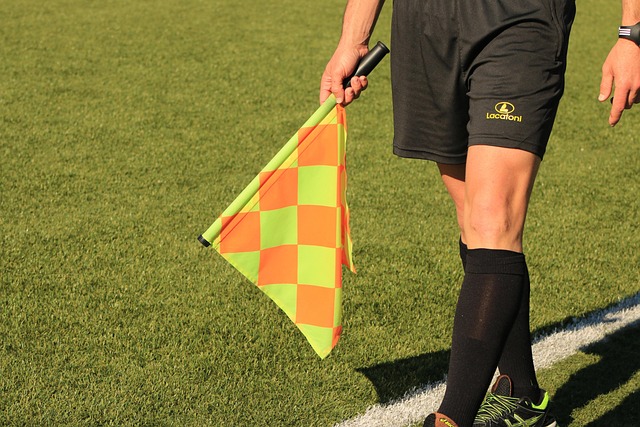
An attacker is behind the second-last defender when a teammate passes forward. The attacker runs onto the pass and touches the ball. Because the player was in an offside position when the pass was made and then interfered with play, the assistant referee can raise the flag.
Being level is onside
If any legally relevant part of the attacker’s body is level with the second-last opponent or level with the ball, the player is not offside. Video review may use lines to determine whether the attacker is clearly ahead, but being level does not count as offside.
Offside position without a penalty
An attacker can stand beyond the defensive line while a teammate passes the ball to another player. If the attacker does not touch the ball, challenge an opponent, obstruct an opponent, or gain an advantage from a rebound, the referee may allow play to continue.
Situations where offside cannot be called
A player cannot be penalized for receiving the ball directly from a:
- Goal kick;
- Throw-in; or
- Corner kick.
For example, an attacker may be behind the defensive line when a teammate takes a corner, and the attacker can legally receive the ball directly from that corner. The normal offside test applies again once the ball is played by a teammate during open play.
Deflections, rebounds, and deliberate defensive play
Offside decisions can be difficult when a defender touches the ball. If an offside-positioned attacker receives the ball after it rebounds from a defender who has made a save or merely deflected the ball, the attacker may still be penalized.
However, a defender’s deliberate play of the ball can reset the offside situation. This generally means the defender had time and a realistic opportunity to control or play the ball, rather than simply reacting to a powerful shot or an unexpected pass. A deliberate save does not reset offside, even if the goalkeeper or another defender touches the ball.
How referees decide an offside call
The assistant referee watches the positions of the attacker, the ball, and the second-last opponent at the exact moment of the teammate’s touch. The assistant referee then waits to see whether the attacker becomes actively involved. This delay helps avoid penalizing a player who is in an offside position but has no effect on the play.
If an offside offense is called, the defending team receives an indirect free kick from the place where the offense occurred. Video assistant referees may review close decisions in competitions that use VAR, particularly when a goal or major attacking opportunity is involved.
Why the offside rule exists
The rule encourages attackers to time their runs, keeps defenders involved in the contest, and stops players from permanently waiting beside the goal. It also creates tactical choices: attackers may try to beat the defensive line, while defenders may move forward together to catch opponents offside.