How to Improve Your Tennis Serve: Technique, Power and Consistency
Improve your tennis serve by building a reliable motion, cleaner contact point and stronger lower-body drive. These practical adjustments can add pace, accuracy and confidence.
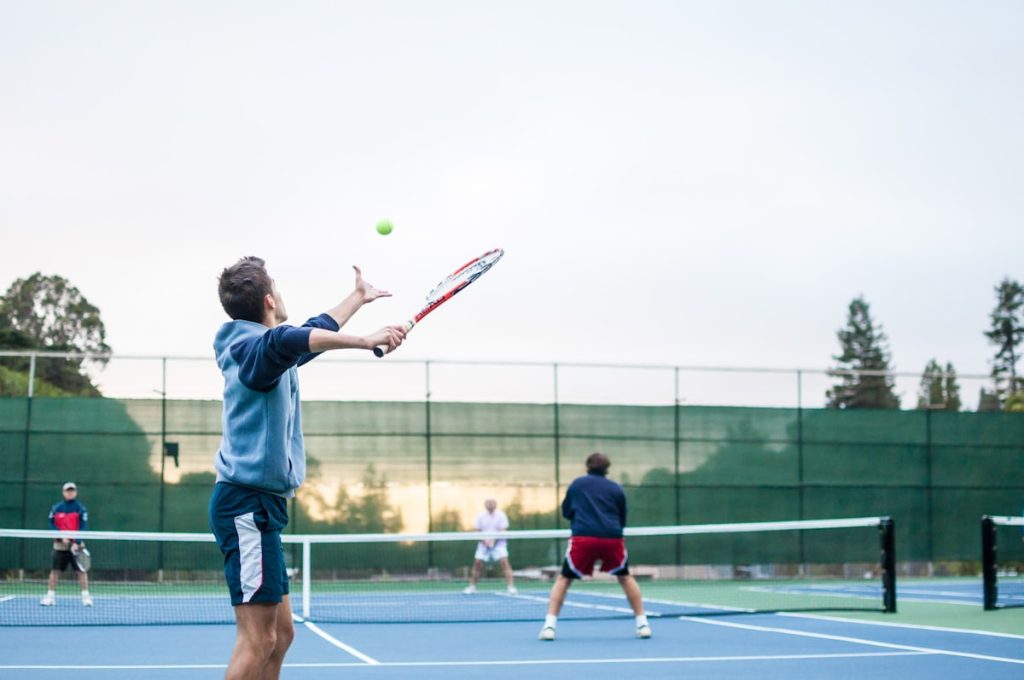
A tennis serve can look effortless when the motion is working, but small faults quickly become expensive: a weak toss pulls the body out of position, a late racket drop reduces power, and a rushed rhythm makes accurate placement difficult. Improving your serve is less about hitting harder on every attempt and more about building a repeatable sequence.
The most effective changes usually come from improving the toss, contact point, leg drive and follow-through in that order. Once those pieces are connected, serve speed and consistency tend to improve together.
Build a reliable tennis serve motion
Start with the ball toss. The ball should rise slightly in front of your hitting shoulder and remain far enough inside the court to encourage forward contact. A toss that drifts behind the head often forces a player to arch backward, lose balance or make contact too low. A toss that travels too far forward can produce a rushed swing and poor control.
Practice the toss separately before adding a full serve. Stand in your serving stance and release the ball without swinging. Try to catch it at the ideal contact position, with the arm extended and the ball a little in front of your body. Repeating this exercise helps make the toss a dependable part of the serving routine rather than something that changes on every point.
Your serving stance should allow the body to coil without creating unnecessary tension. Keep the feet stable, bend the knees comfortably and turn the shoulders so the chest is not facing the net too early. The goal is to store energy in the legs and torso, then release it upward and forward.
As the tossing arm rises, let the racket arm move into a relaxed trophy position. The elbow should not collapse toward the body, and the racket should be allowed to drop behind the shoulder naturally. This racket drop creates a longer acceleration path. Trying to force it by squeezing the grip or consciously pushing the racket down often creates stiffness.
Improve serve power without losing control
More racket-head speed comes from sequencing, not simply using more arm strength. Drive upward from the legs, rotate the hips and shoulders, then allow the arm and racket to accelerate through contact. This kinetic chain gives the serve pace while reducing the temptation to muscle the ball with the shoulder.
Use a relaxed grip, usually around a continental grip for a standard flat, slice or kick serve. A grip that is too close to a forehand grip makes it harder to pronate the forearm and control different types of serve. Excessive grip pressure also limits racket-head speed and can contribute to arm discomfort.
Contact should be made at the highest comfortable point, with the arm extended but not locked. Reach up through the ball rather than reaching across the body. For a flat serve, the racket travels more directly through the ball. For a slice serve, contact is made with a brushing action around the outside of the ball. A kick serve requires more upward and brushing movement, with the ball toss usually positioned slightly farther over the non-dominant side.
Do not chase maximum speed during every practice session. Begin with targets that reward height over the net and depth in the service box. Once you can land a sequence of serves with a controlled motion, increase racket speed gradually. A slower serve with reliable placement is more useful in a match than a powerful serve that produces frequent double faults.
Use drills to improve serve consistency
Target practice gives your serve a clear purpose. Divide the service box into wide, body and T targets, then hit a small number of serves toward one target before changing direction. Track both makes and misses. If the ball consistently misses long, reduce the forward force or add more spin. If it lands in the net, check the toss height and whether your swing is travelling upward.
The half-serve drill is useful for learning contact and pronation without the pressure of a full swing. Kneel or begin from a shortened stance, toss the ball, and focus on brushing up and through contact. This drill removes much of the leg drive so you can feel the racket path. Follow it with serves from the service line, then move back toward the baseline.
Shadow swings can also improve the rhythm of the serve. Perform the motion without a ball and pause briefly in the trophy position. Check that the tossing arm is extended, the front shoulder is lifted and the racket arm is relaxed. Then complete the motion smoothly. Video recorded from the side and behind can reveal a drifting toss or a contact point that is lower than it feels.
Keep practice sets short enough to preserve technique. Once fatigue causes the toss to wander or the shoulder to tighten, take a break. Repeating poor mechanics under fatigue can make the problem harder to correct.
Make the serve more effective in matches
A dependable first serve should create a predictable advantage, but it does not need to be hit at full power. Choose a primary location and a safer second option before the point begins. Serving to the opponent’s weaker return side, changing the direction after several similar serves and occasionally using the body serve can make placement more valuable than raw speed.
For the second serve, prioritize height, spin and margin over the net. The ball should travel high enough to clear the net safely and dip into the box. If the second serve feels like a cautious first serve, the racket may be moving too directly forward. More upward brushing and a higher net clearance can improve both safety and movement.
Use the same pre-serve routine for every point. Select the target, take a steady breath, settle the feet and commit to the toss. A consistent routine helps prevent rushed serving after a double fault or an unreturned first serve.
Improving a tennis serve takes repeated quality practice rather than one dramatic technical change. Work on the toss and rhythm first, then add leg drive, racket-head speed and directional targets. When the motion remains relaxed and balanced, greater pace becomes a result of better timing instead of extra effort.