Stretching Exercises for Athletes: Timing, Techniques and Sport-Specific Choices
Learn how dynamic warm-ups, static stretches and mobility exercises can fit into athletic training, recovery and injury-risk management.
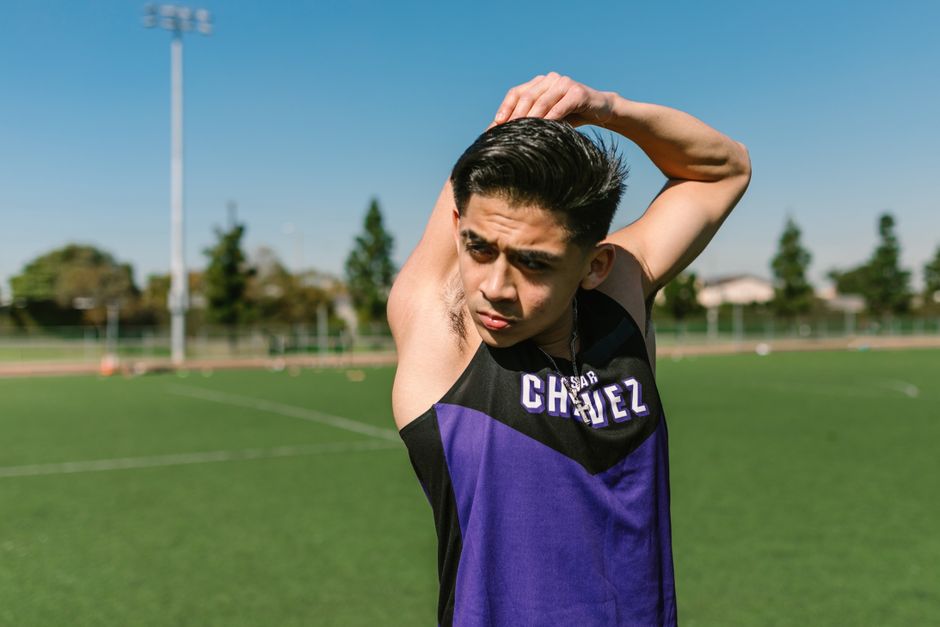
Stretching exercises for athletes are most useful when they match the demands of the session. A sprinter preparing for maximal acceleration, a footballer changing direction repeatedly and a swimmer working through a large shoulder range do not need the same routine. The main distinction is between movements used to prepare the body and longer-held stretches used to improve or maintain flexibility.
Dynamic and static stretching for athletic performance
Dynamic stretching uses controlled movement through a joint’s available range. Leg swings, walking lunges, arm circles and controlled high-knee movements can raise body temperature while rehearsing patterns that appear in training or competition. These exercises are generally better suited to a pre-workout warm-up than prolonged passive stretching.
Static stretching involves moving into a tolerable stretch and holding the position without bouncing. Calf, hamstring, hip-flexor and chest stretches can be useful after training or in a separate flexibility session. A static stretch should create mild tension, not sharp pain, numbness or a feeling that the joint is being forced beyond control.
Long static holds immediately before explosive activity may temporarily reduce force or power in some circumstances, particularly when the holds are intense or repeated. That does not make static stretching harmful in general. It means that timing and dosage matter. Athletes who need flexibility before performance can use brief, comfortable holds followed by dynamic movements, while placing longer flexibility work after training or in a separate session.
Effective stretching exercises by body area
Lower body
- Walking lunges with a reach: combine hip extension, ankle movement and trunk control. Keep the front knee aligned with the foot and avoid dropping heavily into each step.
- Leg swings: swing the leg forward and backward, then side to side, using a small range at first. Hold onto a stable surface if balance is limited.
- Calf raises with controlled ankle movement: rise slowly, lower under control and allow the heel to move through a comfortable range. This is a mobility and activation exercise rather than a passive stretch.
- Half-kneeling hip-flexor stretch: place one knee on the floor, brace the trunk and gently shift the pelvis forward without arching the lower back. A glute contraction can help maintain a stable position.
- Hamstring hinge: place one heel slightly forward, keep the spine long and hinge from the hips. The sensation should remain in the back of the thigh rather than the lower back.
Upper body and trunk
- Arm circles and scapular movements: use small circles before gradually increasing the range. Move the shoulder blades rather than forcing the arms into a painful position.
- Open-book rotations: lie on your side with the knees supported, rotate the upper arm and chest away from the starting position, and keep the movement slow.
- Wall chest stretch: place the forearm against a wall and rotate the body slightly away. Stop if the shoulder feels pinched or unstable.
- Quadruped thoracic rotations: from hands and knees, place one hand behind the head and rotate the elbow upward while keeping the hips relatively steady.
How to build an athletic stretching routine
A pre-training warm-up can begin with five to ten minutes of easy movement, followed by dynamic exercises that resemble the sport. A football player might add lateral steps, controlled lunges and progressive accelerations. A basketball player may use ankle mobility, hip movements, defensive slides and low-intensity jumps. A runner can progress from walking to easy jogging, leg swings and short drills before faster work.
Use a smaller range and slower speed when the body is cold or when an exercise is unfamiliar. The range can increase as control improves. A warm-up should prepare the athlete for the planned intensity, not create fatigue or soreness before the session begins.
For flexibility training after exercise, choose two or three areas that limit technique or comfort. Hold each static stretch for roughly 15 to 30 seconds, repeat when useful, and breathe normally. Longer holds are not automatically better. Consistent exposure over weeks is usually more relevant than forcing a single session.
Matching stretches to different sports
Sport-specific stretching should reflect positions and ranges used in competition, but it should not be confused with copying every movement at full intensity. Athletes in running and field sports often need attention to the ankles, calves, hips and hamstrings. Court-sport athletes may benefit from controlled preparation for lateral movement, landing and rotation. Swimmers, rowers and throwing athletes may need particular care with shoulder rotation, the upper back and trunk control.
Flexibility is only one part of movement quality. A large passive range is not necessarily useful if the athlete cannot control it under load. Strength through the available range, balance, coordination and gradual exposure to sport-specific forces also influence performance. For that reason, mobility drills are often paired with activation exercises such as controlled calf raises, glute bridges or low-intensity technical movements.
Limitations, safety and common mistakes
Stretching cannot guarantee injury prevention, correct every movement problem or replace strength training and appropriate workload management. Tightness may reflect fatigue, protective muscle activity, a strength imbalance or an irritated joint rather than a simple lack of flexibility. Repeatedly pushing into pain can make the problem worse.
- Avoid bouncing aggressively during static stretches.
- Do not force a joint past a stable, controlled range.
- Stop when stretching causes sharp pain, tingling, numbness or joint instability.
- Increase training volume and intensity gradually instead of using stretching to compensate for a sudden workload increase.
- Seek assessment from a qualified health professional after a significant injury or when pain persists, worsens or affects normal movement.
The most practical approach is to use dynamic stretching and sport-specific movement before demanding activity, reserve longer static stretching for after training or separate flexibility sessions, and track how the routine affects performance and symptoms. An exercise that improves comfortable movement without reducing control is more useful than a deeper stretch performed aggressively.