Football Positions Explained: Roles, Responsibilities and Formations
A clear explanation of football positions, from goalkeeper and centre-back to midfield and attack, including how roles change within modern formations.
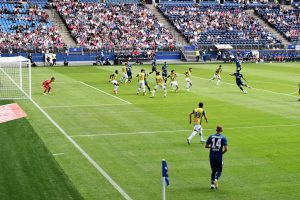
Football positions explained simply: each player starts with a defined area of responsibility, but modern football demands frequent movement between lines. A goalkeeper protects the goal and begins attacks, defenders manage space and duels, midfielders connect defence with attack, and forwards create or finish scoring opportunities. The exact duties depend on the team’s formation, pressing strategy and phase of play.
The four main areas of a football team
Traditional football positions are grouped into goalkeeper, defence, midfield and attack. These categories describe a player’s starting role rather than a fixed location. A full-back may move into midfield during possession, while a striker may drop deep to help create chances.
Goalkeeper
The goalkeeper is the only player normally permitted to handle the ball inside their own penalty area. Their primary task is shot-stopping, but the role also includes catching crosses, defending one-on-one situations, organising the defence and restarting play.
A modern goalkeeper is often judged on distribution as well as saves. They may pass short to centre-backs, switch play with longer kicks or move outside the penalty area to cover space behind a high defensive line. A goalkeeper who acts as an additional passing option is sometimes described as a sweeper-keeper.
Defenders
Defenders protect the space in front of the goal and try to prevent opponents from progressing into dangerous areas. The main defensive positions are centre-back, full-back and wing-back.
- Centre-back: Centre-backs defend the central channel, track forwards, challenge for aerial balls and cover space behind other defenders. In possession, they may carry the ball forward or pass through the opponent’s midfield.
- Full-back: Right-backs and left-backs usually defend the wide areas. They face opposing wingers, support their own wide attacks and must recover quickly when possession changes.
- Wing-back: Wing-backs operate in systems with three centre-backs and are expected to cover almost the entire flank. Their role combines the defensive duties of a full-back with the attacking responsibility of a winger.
Midfielders
Midfielders operate between defence and attack, so their work often changes from one phase of play to the next. They may be responsible for ball recovery, passing progression, chance creation or arriving near the penalty area.
- Defensive midfielder: A defensive midfielder protects the defenders, blocks passing lanes and collects loose balls. Some players stay in front of the centre-backs, while others press aggressively or drop between defenders during buildup.
- Central midfielder: Central midfielders help control tempo, move the ball between areas and support both penalty boxes. Their responsibilities depend on whether the team needs possession, defensive cover or forward runs.
- Box-to-box midfielder: This term refers to a midfielder who contributes across the length of the pitch, including pressing, ball carrying, tackling and late runs into the box. It describes a workload and style rather than an official position on every team sheet.
- Attacking midfielder: An attacking midfielder plays behind the forwards and looks for passes between defensive lines. They may create through balls, combine with wide players or shoot from outside the penalty area.
Forwards and wide attackers
Forwards are primarily responsible for creating and finishing attacks, although they also influence the first line of defensive pressure.
- Winger: Wingers start near the touchline, where they can take on full-backs, cross or cut inside. A winger on the opposite side of their stronger foot may be called an inverted winger because cutting inside is a common part of the role.
- Wide forward: A wide forward begins on the flank but often moves into central scoring positions. This role is usually more focused on goals and shots than a traditional touchline winger.
- Centre-forward: The centre-forward is the main attacking reference in many systems. They may hold the ball up, attack crosses, run behind the defence or combine with teammates.
- Striker: “Striker” is a broad term for an advanced attacker whose main objective is to threaten the goal. A striker can be a penalty-box finisher, a mobile runner or a linking forward.
- Second striker: A second striker plays close to a main centre-forward but drops into pockets of space to link midfield with attack. The role is less common as a separate label than it was in some older formations, but the function still appears in modern systems.
How football positions work in common formations
A formation shows the team’s general structure, not the precise location of every player at every moment. The same player can perform different duties in a 4-3-3, 4-4-2 or 3-5-2 because the nearby teammates and available spaces change.
4-4-2 formation
The 4-4-2 usually has a goalkeeper, four defenders, four midfielders and two forwards. Its shape is relatively clear: two centre-backs defend centrally, full-backs cover the flanks, and two central midfielders support a pair of wide midfielders and forwards. The main challenge is avoiding large gaps between the midfield and defence.
4-3-3 formation
A 4-3-3 uses three midfielders and three forwards. One midfielder may hold position while the other two move forward or cover wide areas. The wingers stretch the defence, allowing the centre-forward to attack central spaces. Full-backs may overlap outside the wingers or move inside to provide an extra midfielder.
4-2-3-1 formation
The 4-2-3-1 has two deeper midfielders, three attacking midfielders and one centre-forward. The double pivot can provide defensive security and support buildup, while the player behind the striker links the midfield with the attack. The wide attacking players may stay wide, cut inside or press opposing full-backs.
3-5-2 formation
The 3-5-2 typically uses three centre-backs, wing-backs, three central midfielders and two forwards. The wing-backs create width, so they must manage demanding transitions. One midfielder may sit behind two more advanced players, while the front two can divide responsibilities between running behind and linking play.
Positions during the main phases of play
Understanding football positions requires separating defensive organisation, possession and transitions. A player’s listed position may stay the same while their task changes significantly between these phases.
Without the ball
Defenders protect the penalty area and maintain distances between the lines. Midfielders screen passes into attackers, cover teammates who press and compete for second balls. Forwards may press centre-backs, block passes into midfield or wait higher up the pitch to provide a counterattacking outlet.
In possession
The team tries to create passing angles, occupy useful spaces and move opponents away from their defensive structure. Centre-backs may spread wide, a defensive midfielder may drop between them, and full-backs may push forward or move centrally. Attackers try to stretch the back line while also occupying spaces where they can receive near goal.
During transitions
The first seconds after losing or winning the ball often reveal the practical demands of a position. A full-back caught high must recover or delay a counterattack. A defensive midfielder may need to stop the first forward pass. A striker who wins the ball may hold possession long enough for teammates to advance, while a winger may sprint into open space.
Why similar positions are not interchangeable
Some football terms overlap, but they are not always identical. A defensive midfielder and a holding midfielder both operate deep, yet one may be asked to press and cover wide spaces while the other primarily protects the centre. A winger and a wide midfielder both use the flank, but a wide midfielder often has greater defensive responsibility.
Centre-back and sweeper are also different descriptions. A centre-back usually marks, covers and defends the central area as part of a defensive line. A traditional sweeper played behind that line and collected balls that passed through. The classic sweeper role is less common in elite football, although some defenders still perform similar covering duties.
Likewise, a false nine is not simply a striker who does not score. It is a centre-forward role in which the player regularly drops away from the highest line, drawing defenders out and creating space for midfielders or wide forwards to attack.
How to identify a player’s position while watching
Do not rely only on the lineup graphic. Watch where the player starts when the team has the ball, where they move when possession is lost and which spaces they are expected to cover.
- A player who protects the area in front of the centre-backs is likely operating as a holding or defensive midfielder.
- A player who repeatedly receives between the opponent’s midfield and defence may be an attacking midfielder or a forward dropping deep.
- A player who begins wide but frequently enters the penalty area may be a wide forward or inverted winger.
- A player who defends the flank and provides the team’s attacking width may be a full-back or wing-back.
Match commentators and coaches may use the same position name differently. Formation diagrams are useful starting points, but a player’s movements, defensive assignments and passing responsibilities provide a more accurate description of their role.