How Does Soccer Work? Rules, Scoring, Positions, and Match Play
Learn how soccer works, including the objective, player positions, scoring rules, offside, fouls, substitutions, and how a match is decided.
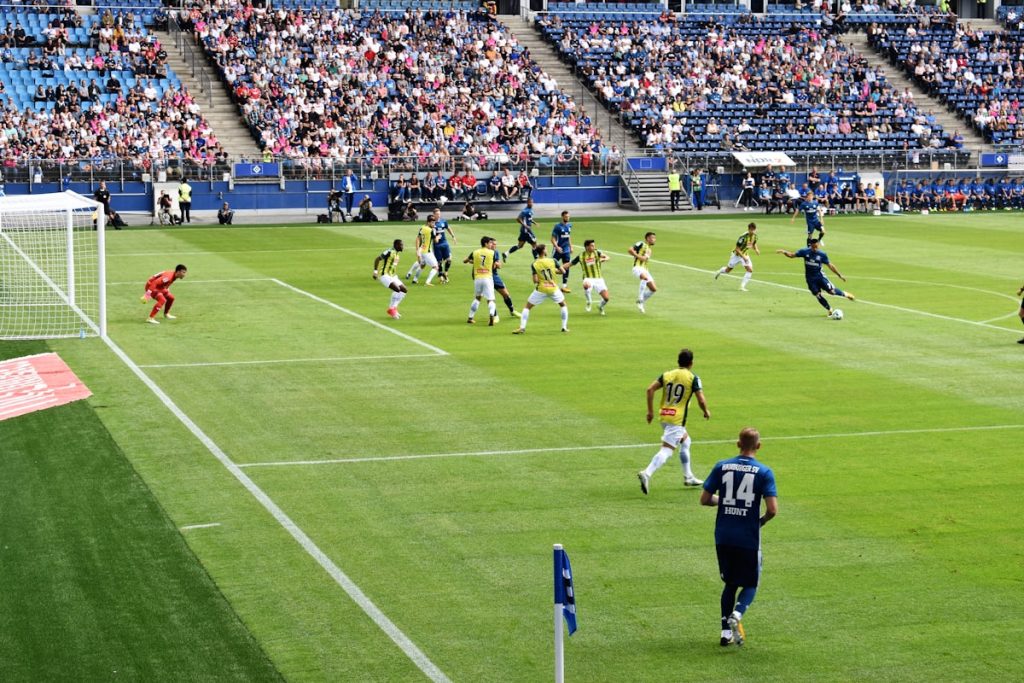
Soccer, also called association football, is a team sport in which two sides try to score by moving the ball into the opponent’s goal. Most players may use any part of the body except the hands and arms, while each team has one goalkeeper who can handle the ball within their own penalty area. The team with more goals at the end of the match wins.
The basic objective and structure of soccer
A standard soccer team has 11 players on the field, including a goalkeeper. A match is played on a rectangular pitch with a goal at each end. The ball is in play for most of the match, and possession changes frequently as teams pass, dribble, tackle, shoot, and defend.
Professional matches usually consist of two 45-minute halves. The referee adds stoppage time at the end of each half to account for delays such as injuries, substitutions, goal celebrations, and disciplinary incidents. The halftime interval normally separates the two periods.
The objective is simple, but teams can approach it in different ways. A side may keep possession through short passing, attack quickly after winning the ball, or defend deeply and rely on counterattacks. The rules determine what players may do, while tactics describe how a team organizes those actions.
How goals, possession, and restarts work
A goal is scored when the entire ball crosses the entire goal line between the goalposts and beneath the crossbar, provided the attacking team has not committed an offence. The goal is awarded regardless of whether the ball is played by a foot, head, or another legal part of the body.
The match begins with a kickoff from the center spot. A kickoff also restarts play after a goal. When the ball leaves the field over the touchline, the opposing team takes a throw-in. If it crosses the goal line without entering the goal, play restarts with either a goal kick or a corner kick, depending on which team touched the ball last.
A goal kick is awarded when the attacking team last touched the ball before it went over the defending team’s goal line. A corner kick is awarded when the defending team was the last to touch it. These restarts create different attacking situations: a goal kick generally begins from the defending side, while a corner places the ball near the defending team’s goal.
Player positions and team roles
Soccer positions are flexible, but they are commonly grouped into four areas:
- Goalkeeper: Protects the goal and may use the hands inside the team’s penalty area, subject to restrictions such as the back-pass rule.
- Defenders: Protect the area near their own goal, challenge attackers, block shots, and begin attacks with passes.
- Midfielders: Connect defense and attack, help control possession, create chances, and provide defensive cover.
- Forwards: Operate closer to the opponent’s goal and are often responsible for finishing attacks, although they also press and help create opportunities.
A formation such as 4-3-3 or 4-4-2 describes the intended distribution of outfield players, not fixed locations. Players may move across the pitch, exchange positions, and change roles depending on whether their team has the ball.
Offside: the rule that shapes attacking movement
The offside rule prevents an attacker from waiting close to the opponent’s goal for an easy pass. A player is in an offside position if, at the moment a teammate plays or touches the ball, the player is nearer to the opponent’s goal line than both the ball and the second-last opponent. Being in an offside position is not automatically an offence.
An offence occurs when the player becomes actively involved in play, such as receiving the ball, interfering with an opponent, or gaining an advantage from a rebound or deflection. There is no offside offence directly from a goal kick, throw-in, or corner kick.
The referee or assistant referee usually awards an indirect free kick to the defending team when offside is penalized. Video review may assist officials in competitions that use the system, but the exact procedures depend on the competition’s regulations.
Fouls, free kicks, and disciplinary cards
A foul is generally an offence involving illegal physical contact or another prohibited action. Examples include tripping, kicking, pushing, holding, striking, or handling the ball deliberately. A careless challenge may result in a free kick, while a reckless or excessively forceful challenge can also lead to a yellow or red card.
A direct free kick allows a goal to be scored directly from the kick. It is awarded for many physical fouls and deliberate handball offences. An indirect free kick requires the ball to touch another player before a goal can count. The referee signals this by raising an arm until another player touches the ball or it leaves play.
A penalty kick is awarded when a direct-free-kick offence is committed by a defending player inside that team’s penalty area. One attacking player takes the kick from the penalty mark against the goalkeeper. The other players must remain outside the penalty area and behind the penalty mark until the kick is taken.
A yellow card is a formal warning. Two yellow cards in the same match result in a red card and dismissal. A red card can also be shown directly for serious misconduct, such as violent conduct or denying an obvious goal-scoring opportunity in certain circumstances. A dismissed player cannot be replaced, leaving the team with fewer players.
Substitutions and how matches are decided
Substitution limits are set by the competition rather than by one universal number for every match. Many modern competitions permit up to five substitutions in regulation time, often using a limited number of substitution opportunities, while other rules may apply in different tournaments or levels of play. A substituted player may or may not be allowed to return, depending on the competition.
League matches can finish as draws, with each team receiving points according to the competition’s rules. In knockout competitions, a tied score may lead to extra time, usually two additional 15-minute periods. If the teams remain level, a penalty shootout may decide which side advances. A shootout is not the same as a series of ordinary penalty kicks during open play: selected players take alternating attempts from the penalty mark under a separate procedure.
What determines success in soccer?
Winning requires more than keeping possession. Teams must create useful chances, protect dangerous spaces, manage transitions, and limit the quality of the opponent’s shots. A team can have less possession and still win if it defends effectively and attacks efficiently.
Important performance factors include shot quality, passing accuracy under pressure, defensive organization, set pieces, goalkeeper performance, and the ability to react after losing or winning the ball. The laws of soccer provide the framework, but coaching, player roles, tactics, and decision-making determine how that framework is used.