How Does Basketball Work? Rules, Scoring and Gameplay Explained
Learn how basketball works, including the aim of the game, scoring, player positions, game structure, fouls, violations and common rules.
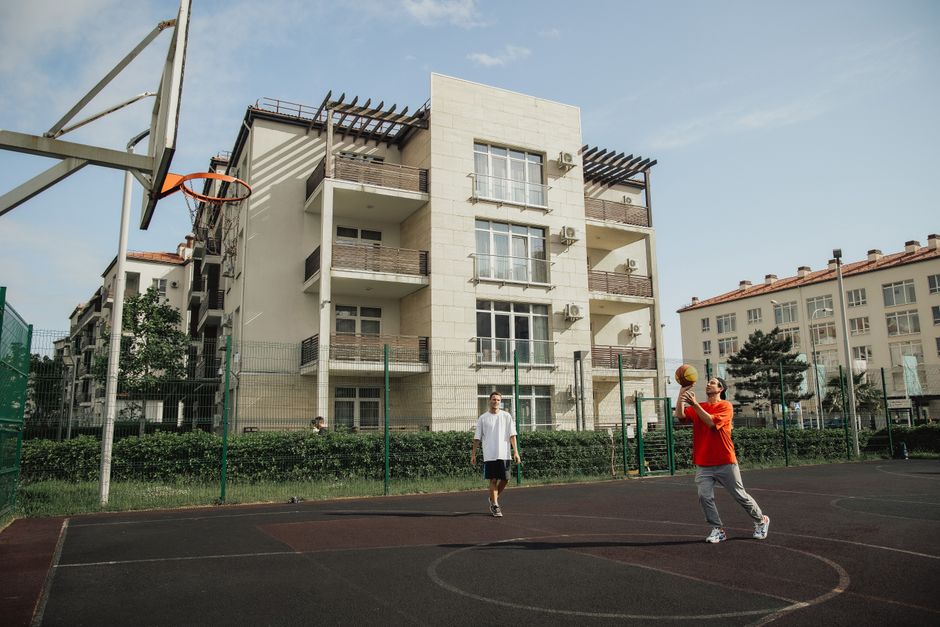
Basketball is a team sport in which two teams try to score more points than their opponents by putting the ball through a raised hoop. Teams normally have five players on the court at once. Players move the ball by passing or dribbling, while the defending team tries to prevent scores and regain possession.
The aim and basic setup of basketball
A regulation basketball court has a hoop at each end. One team attacks the basket in its frontcourt while the other team defends it. After a made basket, the opposing team usually takes the ball from the baseline and attacks in the other direction.
Games begin with a jump ball at centre court in many competitions. Play then continues through separate possessions. A possession starts when a team gains control of the ball and ends when it scores, loses the ball, commits a violation, or the officials stop play.
How basketball scoring works
- Two-point field goal: A shot made from inside the three-point line is worth two points.
- Three-point field goal: A successful shot taken from beyond the three-point line is worth three points.
- Free throw: A free throw is worth one point and is taken without defensive interference after certain fouls.
The team with the most points at the end of the game wins. If the score is tied, the teams play an overtime period. The exact length of regulation and overtime depends on the competition. The NBA and many international competitions use different quarter lengths and some rule details.
How a team attacks
Players can pass the ball to teammates or dribble it while moving. A player who stops dribbling may pass or shoot, but cannot normally start a second dribble unless another player touches the ball or the player loses control in a permitted way.
Attacking players look for open shots, drive toward the basket, set screens, and move without the ball. A team usually has a limited amount of time to attempt a shot, known as the shot clock. In many major competitions, the shot clock is 24 seconds, although local rules can differ.
Once a team gains possession in its backcourt, it must usually move the ball into the frontcourt within a set time. It cannot normally return the ball deliberately to the backcourt after establishing frontcourt control.
How a team defends
Defenders try to stop shots, pressure ball handlers, block passing lanes, and collect rebounds after missed shots. A team may use man-to-man defense, in which each defender is responsible for an opponent, or zone defense, in which defenders protect areas of the court.
A defensive rebound gives possession to the team that stopped the attack. An offensive rebound allows the attacking team to keep the ball after a missed shot and create another scoring opportunity.
Player positions and roles
Traditional basketball positions are point guard, shooting guard, small forward, power forward and centre. Modern teams often use flexible roles rather than fixed positions.
- Point guard: Often directs the offense and brings the ball up the court.
- Shooting guard: Commonly contributes perimeter shooting and backcourt defense.
- Small forward: Usually performs a mixture of scoring, rebounding and defending.
- Power forward: Often plays near the basket but may also shoot from outside.
- Centre: Frequently protects the rim, contests shots and battles for rebounds.
Common basketball violations
Violations result in a change of possession or another penalty. Common examples include travelling, double dribbling, carrying the ball, stepping out of bounds, taking too long to cross half court and staying too long in the restricted offensive area under the basket. The exact time limits and enforcement can vary between leagues.
Travelling occurs when a player moves illegally without dribbling. A double dribble occurs when a player ends a dribble and then begins another one without an intervening touch by another player. An offensive player can also be called for an illegal screen or for charging into a legally positioned defender.
Fouls, free throws and possession
A foul is illegal physical contact or another prohibited action. Personal fouls may involve holding, pushing, blocking or hitting an opponent. A shooting foul can lead to free throws, while a non-shooting defensive foul may give the offended team possession or free throws after a team reaches its foul limit.
Players can foul out after reaching the maximum personal-foul limit set by their competition. Teams may also enter a penalty situation when they commit too many fouls in a quarter or half, giving opponents additional free-throw opportunities.
How basketball games are organized
A game is divided into quarters, with a halftime break and shorter stoppages between periods. Coaches can call timeouts, substitute players and adjust defensive or offensive tactics. The clock stops during many dead-ball situations, including fouls, out-of-bounds plays and timeouts.
Although the basic objective is consistent, basketball rules differ among organizations such as the NBA, FIBA, NCAA and school competitions. Court dimensions, quarter length, foul limits, timeout rules and possession procedures should therefore be checked for the specific league being watched or played.