
Singles vs Doubles Tennis: Rules, Court Size, Strategy and Fitness
Compare singles and doubles tennis, including court dimensions, scoring, serving rules, tactics, movement, and the skills needed for each format.
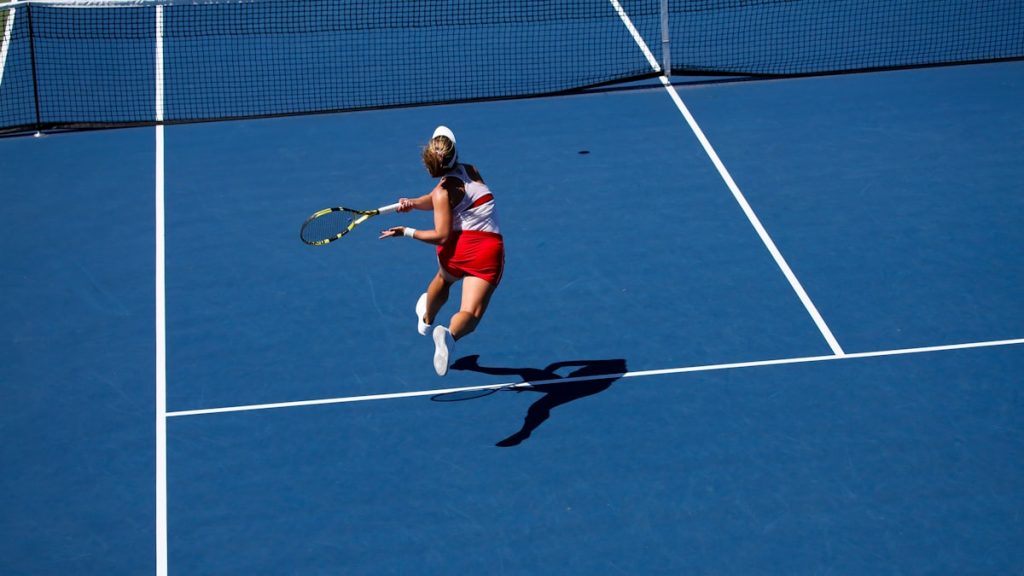
Singles and doubles tennis use the same basic scoring system, but they create very different matches. Singles puts one player in charge of the entire court, making endurance, shot variety, and rally construction especially important. Doubles adds a partner, a wider strategic role, faster exchanges at the net, and the need for clear communication.
Singles and doubles tennis: the main differences
In singles, one player competes against one opponent. Each player must cover the full singles court alone, defend both sides, and create openings without help from a teammate. Points often include longer rallies and more movement from corner to corner.
Doubles has two players on each team. The doubles court is wider because the alleys are included, while the singles sidelines are used in singles play. Teams can divide responsibilities, protect open space, and apply pressure with two players near the net. As a result, doubles points are often decided by positioning and reaction speed rather than endurance alone.
| Feature | Singles | Doubles |
|---|---|---|
| Players | One per side | Two per side |
| Court area | Uses the inner singles sidelines | Uses the full doubles width |
| Primary challenge | Covering the court alone | Coordinating with a partner |
| Common point pattern | Baseline rallies and court coverage | Serve, return, volleys, and quick reactions |
| Important skills | Consistency, stamina, movement, and shot placement | Communication, serving, poaching, and net play |
How the rules differ
The basic scoring sequence is the same in both formats: points progress from love to 15, 30, 40, and game, with a player or team usually needing six games to win a set by a margin of two. Tournament rules can vary for deciding sets and match tiebreaks, so players should check the competition regulations.
Singles uses the singles court, which is narrower than the full doubles court. In doubles, the tramlines count as part of the playing area. The service boxes remain the same, but the larger court gives doubles teams more room to use angles and stretch an opponent.
Doubles also has an order of play that must be followed. Partners normally alternate serving games, and the receiving team decides which player receives from each side. Once the receiving positions are established for a set, players generally keep those sides until the set ends. The server’s partner and the receiver’s partner must also maintain the correct positions before the serve.
Singles tennis strategy
Singles tactics focus on moving an opponent without losing control of the rally. A player may use deep cross-court shots to create space, then change direction down the line when the opening appears. Serving to different areas, returning with depth, and attacking a short ball are central parts of singles strategy.
Because there is no partner to cover the court, recovery position matters after every shot. Players usually aim to return toward a central location that gives them a reasonable chance of reaching the next ball. Poor shot selection can leave large areas exposed and force a difficult defensive sprint.
Singles also places greater demands on stamina and mental patience. A player may need to defend several consecutive shots before creating a chance to attack. Reliable footwork, control under pressure, and the ability to change pace can be more valuable than hitting hard on every point.
Doubles tennis strategy
Doubles strategy is built around teamwork and court geometry. One player often serves while the partner positions near the net to threaten a volley or intercept a cross-court return. This attacking move, commonly called poaching, can end a point quickly but requires trust and timing.
The returning team must decide how aggressively to attack the serve. A deep return can push the server back, while a low return toward the net player can make a volley difficult. Teams also use lobs, angled volleys, and shots directed between opponents to create uncertainty.
Communication prevents many doubles errors. Partners should agree on serving targets, net movements, switching rules, and who will take balls hit between them. A brief signal before the serve can indicate a planned poach or a decision to stay in position.
Fitness and skills: singles versus doubles
Singles generally requires more continuous court coverage. Players accelerate, stop, recover, and change direction repeatedly, often during long baseline exchanges. Aerobic fitness, leg strength, balance, and recovery between points are especially useful.
Doubles usually involves shorter bursts, faster reactions, and more frequent explosive movements near the net. Good hand-eye coordination, compact swings, anticipation, and an effective first volley can have a major impact. Doubles players still need stamina, particularly during long matches, but the physical workload is distributed across two teammates.
The technical priorities also differ. Singles players often benefit from a dependable serve, heavy groundstrokes, defensive movement, and the ability to construct points patiently. Doubles players need a strong serve and return, controlled volleys, overheads, quick reflexes, and the discipline to maintain team positioning.
Which format suits different players?
Singles may suit players who enjoy independence, long rallies, and making every tactical decision themselves. It can also provide a clear way to measure progress because every movement, shot, and error belongs to one player.
Doubles can be a strong choice for players who enjoy collaboration, quicker points, and net exchanges. It may reduce the amount of court each player must cover, although the faster pace and need for coordination create their own challenges. Players recovering from injury should still choose the format according to medical advice and the demands of their specific condition.
Many tennis players benefit from playing both formats. Singles improves movement, endurance, and point construction, while doubles develops serving patterns, volleying, anticipation, and communication. Skills learned in one format can strengthen performance in the other.