
How Does Clay Court Tennis Differ From Other Surfaces?
Clay court tennis changes the speed, bounce, movement and tactical demands of a match. Learn how it compares with hard and grass courts, including the role of sliding, topspin, weather and court maintenance.
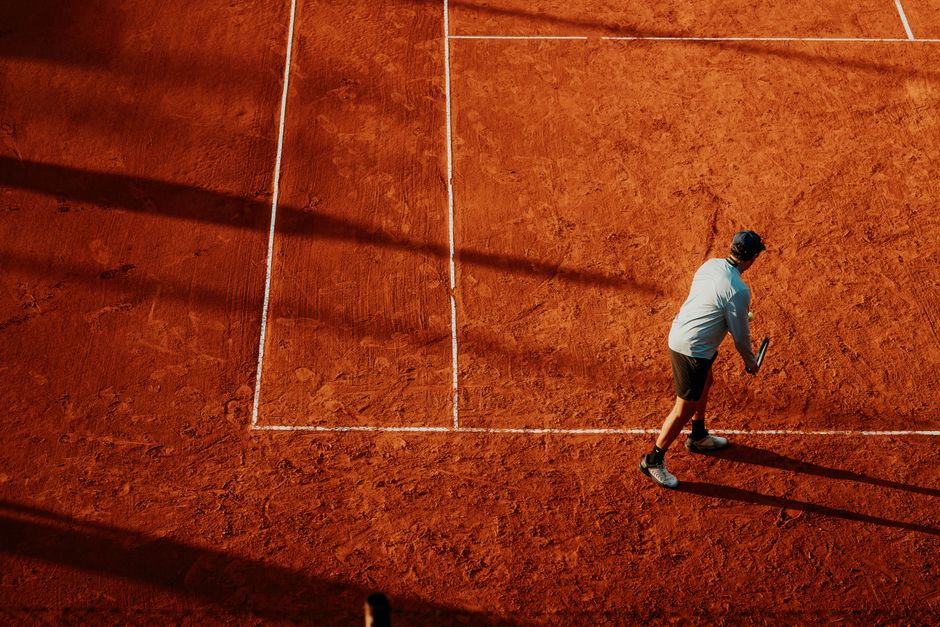
Clay court tennis differs from hard-court and grass-court tennis because the surface slows the ball, produces a higher and more variable bounce, and allows players to slide into shots. These characteristics affect rally length, serve effectiveness, footwork, court positioning and the value of topspin. Clay is not one uniform surface, but its common properties create a distinct style of play.
What makes a clay tennis court different?
A clay court is usually made from a compacted base covered by layers of crushed mineral material. Traditional red clay uses finely ground brick, while other courts may use different mineral blends or artificial clay systems. The exact composition, moisture level and preparation influence how the ball behaves.
The loose surface particles create friction between the ball and the court. Compared with many hard courts, this generally reduces the ball’s forward speed after the bounce. The surface also grips the ball’s felt, helping topspin produce a higher bounce. A player who hits with heavy topspin can push an opponent farther behind the baseline and make the next shot more difficult to control.
Clay can also leave a visible mark where the ball lands. Officials may inspect marks on some clay courts when a close call is challenged, although procedures vary by competition and tournament rules. Wind, rain and drying conditions can change the surface during a match, so clay-court performance is influenced by maintenance as well as by court construction.
How clay changes ball speed and bounce
Clay is commonly described as a slow tennis surface because rallies often develop more gradually than on a fast hard court or grass court. The description is useful, but it should not be treated as an absolute rule. Court pace depends on the material, preparation, temperature, humidity, ball type and the force of the player’s shots.
The bounce is usually higher and less predictable than on grass. A topspin shot can kick up sharply, while a ball that lands on a worn or uneven patch may take a slightly different path. This gives players more time to reach many balls, but it also makes control and height management more demanding.
Flat shots and low slices do not receive the same benefit from the surface as heavy topspin. A well-executed slice can stay low, but the clay may still take pace from it. Players therefore need to judge whether a low-risk rally ball, an angle, a drop shot or an attack behind the opponent will create the best opening.
Movement and sliding on clay courts
Sliding is one of the clearest differences between clay tennis and tennis on hard or grass courts. A player can begin a controlled slide while approaching a wide ball, use the slide to absorb momentum and finish balanced for the next shot. Skilled movement is not simply a matter of running faster; it involves timing the final steps and controlling body weight as the shoe releases from the surface.
Sliding can help a player reach balls that would be difficult to stop for on a grippy hard court. It may also reduce abrupt braking forces, although clay does not eliminate injury risk. Poor technique, unsuitable footwear or a dusty and uneven court can cause loss of balance and place stress on the ankles, knees and hips.
Clay-court shoes normally use a full herringbone tread designed to provide traction while still allowing a controlled slide. Smooth-soled tennis shoes can be unsafe or ineffective on clay, while an inappropriate outsole may damage the court or prevent proper movement. Players should follow the surface and footwear requirements of the facility.
How tactics differ on clay
Longer rallies are common on clay because the surface gives players more time to retrieve the ball and reduces the immediate reward from a single powerful shot. That does not mean attacking tennis is ineffective. It means attacks often require several linked actions: moving the opponent, opening space, hitting with sufficient margin and finishing when the defensive position has deteriorated.
Heavy topspin is especially valuable because it combines net clearance with a high bounce. Cross-court forehands can push an opponent outside the singles sideline, while a later change of direction can expose the open court. A player who relies mainly on a flat first strike may need to manage errors carefully because the surface can give the opponent time to recover.
Serve performance also changes. A fast serve can still produce aces and unreturned serves, but it generally creates fewer free points than on a fast grass court. Kick serves become useful because the bounce can rise above the receiver’s preferred contact height. Returners often stand farther back to gain time against the serve, then use depth and spin to begin a longer point.
Net play remains possible, but approaching the net requires more care. The slower surface can give an opponent extra time to pass or lob, and a player may need to approach behind a particularly deep or angled ball. Drop shots can be effective when an opponent is positioned far behind the baseline, but their success depends on touch, court condition and the quality of the opponent’s movement.
Clay compared with hard and grass courts
| Feature | Clay courts | Hard courts | Grass courts |
|---|---|---|---|
| Typical pace | Slow to medium, depending on construction and conditions | Medium to fast, with substantial variation | Often fast, especially when dry and closely cut |
| Bounce | Usually higher, with possible variation from marks and wear | Generally more consistent, though court speed and texture differ | Often lower and sometimes less predictable |
| Movement | Controlled sliding is a central skill | Stopping and changing direction rely more on grip | Short steps and rapid adjustments are important |
| Common tactical emphasis | Topspin, depth, patience and point construction | Balanced baseline play, serving and transition attacks | Serving, returning, short points and quick net approaches |
These are broad tendencies rather than fixed rules. A slow hard court can produce long rallies, and a dry, fast clay court can reward aggressive players. Player style, ball type and local conditions may matter as much as the nominal surface.
Weather, court preparation and maintenance
Moisture has a major effect on clay. A damp court is usually heavier and slower, while a dry court can become quicker and more dusty. Excessive rain may make the surface unsafe and damage its structure. Tournament staff may water, roll, sweep and repair the court between matches to preserve an even playing surface.
Wind can also matter because clay-court points often last longer and include more high-bouncing balls. Players must control their margins over the net and account for how wind affects both topspin and defensive lobs. Heat may accelerate drying and alter the court’s pace during a match.
Regular maintenance is more demanding than on many permanent hard courts. Lines can become covered, sliding can create worn areas and loose material can gather in the corners. Good preparation helps keep the bounce consistent and reduces the chance that a single damaged patch determines a point.
Common misconceptions about clay court tennis
Clay tennis is not only for defensive players. The surface rewards rally tolerance and recovery, but aggressive players can use spin, angles and changes of direction to control points. A powerful shot is still useful when it is placed accurately and supported by a strong next ball.
Clay is also not automatically slow in every setting. Surface composition, court density, watering, temperature and tournament balls can create meaningful differences. Describing a court as red clay identifies its visual and material category, not a precise pace rating.
Finally, sliding is not a substitute for footwork. Players need an efficient split step, early preparation, balance and the ability to recover after the slide. Without those skills, sliding may merely delay the next movement rather than improve court coverage.
What players need to adapt
A player moving from hard courts to clay usually benefits from allowing more space behind the baseline, preparing earlier for a higher bounce and learning to finish wide movements with control. Training should include repeated recovery patterns, high-margin topspin shots, kick serves, defensive lobs and point construction under pressure.
Equipment choices also have practical consequences. Clay-court shoes provide the appropriate tread, while strings and tension may be adjusted to support spin, control or durability according to the player’s preferences. Because rallies can be physically demanding, hydration, recovery and sensible scheduling are relevant parts of preparation rather than separate concerns.
The central difference is that clay often shifts the contest from immediate ball speed toward time management, movement quality and the ability to create an advantage over several shots. Players who understand those trade-offs can use the surface more effectively instead of simply trying to reproduce their hard-court patterns.