The Importance of Teamwork in Sports: How Collaboration Shapes Performance
Teamwork in sports affects communication, decision-making, trust, accountability and resilience. This article examines how coordinated teams perform, where collaboration can fail, and how athletes and coaches can develop it effectively.
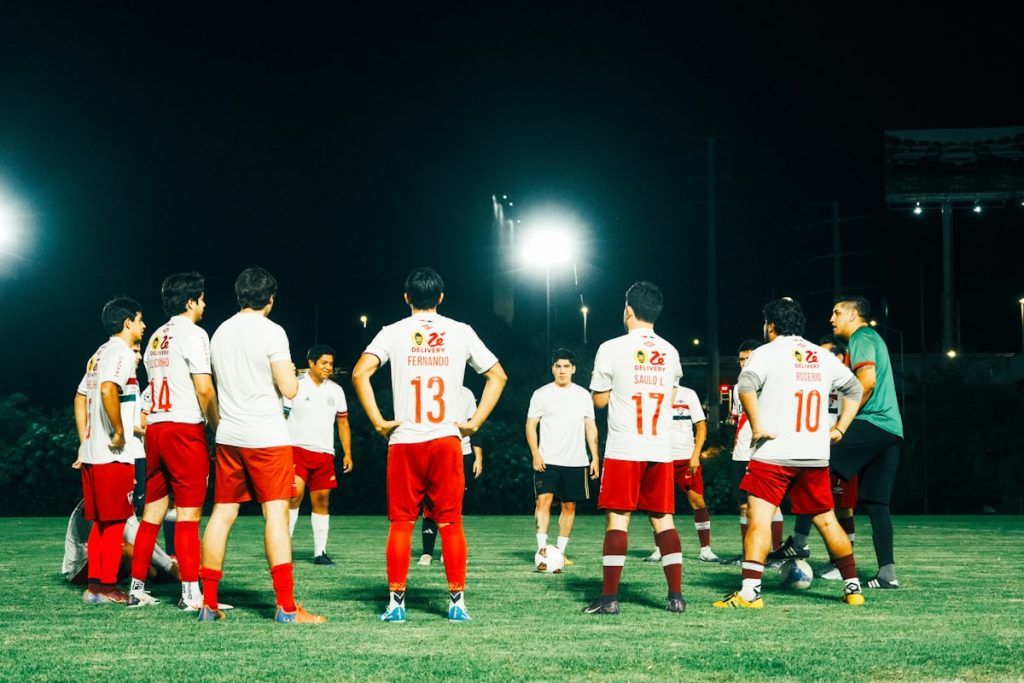
The importance of teamwork in sports extends beyond players cooperating during a match. Effective teamwork connects individual skills to a shared plan, allowing athletes to coordinate movement, exchange information, manage pressure and respond to changing conditions. A talented player may influence a contest, but most team sports require several people to make correct decisions in sequence.
Teamwork is not the same as simple unity or friendship. It is a performance process: players understand their roles, communicate relevant information, trust teammates to carry out responsibilities and adjust their actions to support a common objective. The form this takes differs between football, basketball, volleyball, hockey, rugby and other team sports, but the underlying principles are widely similar.
How teamwork improves sports performance
Shared roles make individual skills more useful
Team sports divide complex tasks among players. A defender may protect space, a midfielder may connect phases of play, and an attacker may create or finish opportunities. In basketball, screening, passing and off-ball movement can create an advantage that one player could not produce alone. In volleyball, a successful attack depends on reception, setting and timing rather than the hitter’s ability in isolation.
Clear role expectations reduce duplicated effort and uncovered areas. They also help athletes decide where to position themselves before an action occurs. Roles should not be completely rigid, because players often need to cover for one another, but a shared structure gives improvisation a useful foundation.
Communication supports faster decisions
Communication in sports includes spoken instructions, gestures, eye contact and pre-agreed signals. Its value is greatest when the situation changes quickly. A short call can warn a defender about an approaching opponent, identify a passing option or signal a tactical adjustment.
Good communication is selective rather than constant. Too many instructions can distract players, while vague language can create hesitation. Teams usually benefit from clear terms that everyone understands, particularly for defensive switches, set plays, pressing triggers and transitions between attack and defence.
Trust reduces hesitation
Trust means expecting teammates to make reliable decisions and fulfil their responsibilities. It does not require assuming that every action will succeed. A player who trusts a teammate may pass into space, move forward to support an attack or leave a position temporarily because cover is available.
Without trust, athletes may hold the ball too long, attempt to solve problems alone or avoid taking reasonable risks. Those reactions can slow the team and make its play easier to predict. Trust develops through repeated evidence: consistent preparation, honest feedback, dependable effort and clear responses to mistakes.
Collective decision-making creates tactical advantages
Teamwork allows athletes to read the same situation and choose compatible actions. A defensive line that moves together can limit space more effectively than players defending as separate individuals. An attacking unit that recognises the same gap can create an overload, draw defenders away and exploit the resulting space.
This shared understanding is sometimes called team awareness or collective intelligence. It is built through training that reproduces realistic decisions, not only through rehearsing isolated techniques. Players need to practise what to do, when to do it and how teammates are likely to respond.
Why teamwork matters beyond the result
It strengthens accountability
A team environment makes responsibilities visible. Players can evaluate whether they tracked an opponent, offered support, followed the tactical plan or helped a teammate recover after an error. Constructive accountability focuses on actions and solutions rather than blame.
Accountability is especially relevant after poor performances. If every mistake becomes a personal accusation, athletes may hide problems or become reluctant to make decisions. If the team ignores errors, the same weaknesses may remain. Productive teams examine what happened, identify controllable causes and agree on a response.
It supports resilience under pressure
Sport produces setbacks such as conceding a goal, losing a lead, facing an injury or competing against a stronger opponent. A connected team can distribute emotional and practical responsibilities during these moments. Players can communicate the next task, maintain structure and prevent one mistake from determining the rest of the performance.
Teamwork does not eliminate disappointment or guarantee a comeback. Its practical benefit is that it can help athletes regain focus more quickly. Leadership may come from a captain, coach or any player who provides useful information and reinforces the agreed plan.
It develops interpersonal and self-management skills
Sporting collaboration requires listening, conflict management, punctuality, preparation and respect for different roles. Athletes learn that personal preferences sometimes have to be balanced against the needs of the group. These lessons can be valuable outside competition, although their transfer is not automatic; coaches need to explain and reinforce the behaviours they want athletes to apply elsewhere.
What effective teamwork looks like in different sports
The importance of teamwork is visible in every team sport, but cooperation has different technical demands.
- Football: coordinated pressing, defensive cover, passing angles and movement without the ball depend on players interpreting space in relation to one another.
- Basketball: screens, rotations, help defence, rebounding assignments and rapid transitions require continuous communication and role changes.
- Volleyball: each rally links reception, setting, attacking, blocking and coverage, so timing and positional discipline are central.
- Rugby: support lines, defensive spacing, phase organisation and set-piece execution rely on players committing to shared patterns while reacting to contact and broken play.
- Relay events: the result depends on both individual speed and the timing and accuracy of exchanges between athletes.
These examples show why teamwork should be assessed in relation to the sport. A team can appear quiet but function well through signs and positioning, while another may communicate loudly without making coordinated decisions.
Common barriers to teamwork
Unclear responsibilities
When players do not know who should challenge, cover, mark or initiate an action, two people may pursue the same task while another task is neglected. Coaches can reduce this problem with specific role definitions, visual demonstrations and practice under game-like conditions.
Individualism and excessive dependence on one player
Individual ability is valuable, but a team that relies on one scorer, passer or defender becomes vulnerable when that athlete is marked, tired or unavailable. Conversely, a rigid demand for equal involvement can prevent a team from using its strongest options. Effective teamwork combines individual initiative with awareness of the wider tactical situation.
Poor responses to mistakes and conflict
Criticism during competition is useful only if it helps the next action. Personal insults, public humiliation and repeated blame usually interfere with communication and trust. Conflict can also arise from unequal playing time, differences in ambition or disagreements about tactics. Coaches should address these issues directly, establish behavioural standards and create appropriate settings for detailed discussion.
False agreement
A team may look united because players avoid disagreement, yet still lack genuine commitment to its plan. Healthy teamwork allows athletes to raise concerns before or after competition. Once a decision is made, however, players need to understand their responsibilities and act consistently enough for the plan to be evaluated fairly.
How coaches and athletes can build teamwork
Team cohesion improves through deliberate practice rather than speeches alone. Coaches can use small-sided games and realistic scenarios that require players to communicate, rotate, cover space and make decisions together. Constraints such as limited touches, time pressure or changing numerical advantages can reveal whether the team understands its principles.
Training should also include short reviews. Useful questions focus on observable behaviour: Was the warning given early enough? Did the covering player know the trigger? What option was available after possession changed? This approach is more informative than simply labelling a performance as committed or uncommitted.
Athletes contribute by learning teammates’ tendencies, giving concise information, fulfilling less visible duties and responding constructively to feedback. Recognising effective defensive work, unselfish movement and recovery efforts can reinforce behaviours that statistics may not fully capture.
Teamwork can be monitored through both outcomes and process indicators. Results such as wins, points or goals matter, but they are affected by opposition quality, injuries and chance. Coaches can also examine communication, successful support actions, defensive rotations, transition reactions and the quality of decisions after errors. No single measure captures teamwork completely.
The limits of teamwork as an explanation
Teamwork is important, but it cannot compensate for every weakness. Technical skill, physical preparation, tactical knowledge, coaching quality, resources and opponent behaviour all influence performance. A cohesive team may still lose to a better-prepared opponent, and a team with outstanding athletes may win despite poor cooperation in a particular match.
Teamwork can also become counterproductive if loyalty discourages honest evaluation or if players prioritise harmony over necessary tactical change. The strongest teams combine trust with scrutiny. They support one another while remaining willing to alter roles, challenge ineffective habits and acknowledge evidence that the current approach is not working.
The importance of teamwork in sports therefore lies in coordination, not in a vague idea of togetherness. When roles, communication, trust and accountability align, individual actions become connected parts of a larger performance. That connection gives teams a better basis for making decisions, handling pressure and improving over time.