
What Is a Steal in Basketball? Rules, Examples and Statistics
A basketball steal is a defensive play that gives a player or team possession by legally taking the ball from an opponent. Learn how steals are recorded, what counts as a steal and how the play differs from a deflection or turnover.
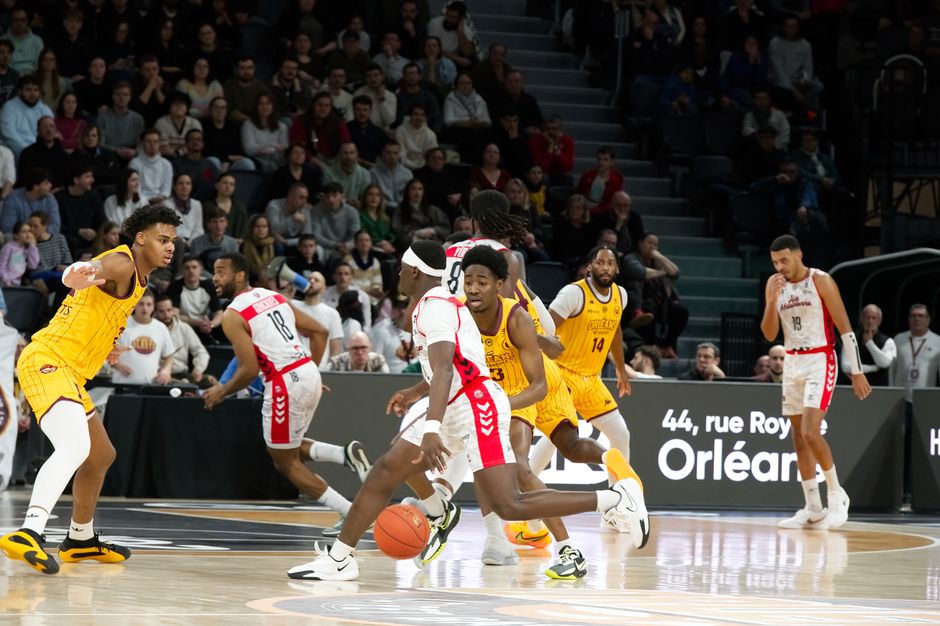
A steal in basketball occurs when a defensive player legally takes the ball from an opponent or causes the opponent to lose possession. The defending team then gains control, often creating a fast-break opportunity at the other end of the court.
Steals are recorded as individual defensive statistics, but they are also team plays. A guard may poke the ball away from a dribbler, a forward may intercept a pass, or a defender may strip the ball during a drive. In each case, the goal is to end the opponent’s possession without committing a foul.
How a steal is recorded
An official scorer credits a steal to the defender whose action directly causes the change of possession. The defender does not always need to catch the ball cleanly. If a hand reaches in and knocks the ball loose, and the opponent loses possession as a result, the play can still count as a steal.
Common examples include:
- Taking the ball from a dribbler: A defender knocks the ball away and recovers it before the offensive player regains control.
- Intercepting a pass: A defender reads the play and catches or controls a pass intended for an opponent.
- Stripping a driving player: A defender removes the ball during a shot attempt or move toward the basket, provided the action is legal.
- Forcing an offensive mistake: A defender’s pressure causes an opponent to lose control, such as stepping out of bounds or fumbling the ball.
The exact statistical treatment can vary slightly between competitions, but the general principle is the same: a defender receives credit when their action is responsible for the opponent’s lost possession.
What is the difference between a steal and a deflection?
A deflection is any touch that changes the direction or movement of the ball. It does not automatically count as a steal. For example, a defender may tip a pass, but an offensive player could recover it immediately. In that situation, the pass was deflected, but there was no change of possession and therefore no steal.
If the deflection leads directly to the defensive team gaining control, the defender may be credited with a steal. A tipped pass that goes out of bounds can be treated differently because the defending team may receive possession, but official scoring rules and the circumstances of the play determine whether an individual steal is awarded.
What is the difference between a steal and a turnover?
A turnover is a broad term for an offensive possession that ends without a successful shot or normal scoring play. Bad passes, travelling, offensive fouls, shot-clock violations and lost balls can all produce turnovers.
A steal is one particular type of turnover caused by the defense. Every steal produces a turnover for the offense, but not every turnover produces a steal. If a player travels or throws the ball out of bounds without defensive involvement, the offense is charged with a turnover, while no defender receives a steal.
Types of steals in basketball
There are several ways players create steals during a game:
- On-ball steal: A defender takes or knocks the ball away from the player handling it.
- Passing-lane steal: A defender anticipates a pass and moves into its path.
- Help-defense steal: A teammate comes from the side or behind to strip the ball from a player who has beaten the primary defender.
- Backcourt steal: Pressure near the half-court line or in the defensive backcourt forces a lost possession before the offense can set up.
Good defenders do not simply reach for the ball repeatedly. They use positioning, footwork and anticipation to make the offensive player choose a difficult pass or dribble. An unnecessary reach can leave the defender out of position or result in a personal foul.
Why steals matter in a basketball game
A steal changes possession and can create a high-value scoring chance before the defense is organized. The player who gets the steal may attack the basket immediately, while teammates run into open space for a transition opportunity. This is why steals are often associated with fast-break points.
However, a high steal total does not automatically mean a player defended well in every possession. Aggressive attempts can produce steals but may also lead to fouls, missed assignments and open shots for opponents. Coaches usually evaluate steals alongside defensive positioning, deflections, rebounding, forced turnovers and the team’s overall defensive efficiency.
How steals appear in basketball statistics
Box scores usually list steals as a player’s total and as a team total. A player with four steals has directly caused four credited changes of possession during that game. The team total can be higher than the sum of the individual figures in some statistical systems because certain team turnovers may not be assigned to a specific defender.
Analysts also use related measures such as steals per game, steal percentage and turnovers forced. Steals per game show a player’s average number of credited steals, while steal percentage estimates how often a player creates a steal during the opponent’s possessions. These numbers are useful, but they should be read alongside playing time and defensive role.
Simple examples of a basketball steal
If a point guard dribbles up the court and a defender knocks the ball away before recovering it, the defender is likely credited with a steal. If a defender catches a pass intended for a cutting player, that is also a steal.
By contrast, if a player loses the ball while changing direction and no defender touches it, the play is normally an unforced turnover rather than a steal. If a defender tips the ball but the same offensive team recovers it, the play is a deflection, not a completed steal.
Frequently asked questions
Can a steal happen during a shot?
Yes. A defender can steal the ball from a player who is beginning a shot or attempting to finish at the basket, as long as the contact is legal and the defender gains credit for causing the loss of possession.
Does a blocked shot count as a steal?
No. A blocked shot is recorded separately. If the defender blocks the attempt and then recovers the ball, the block and any resulting possession are recorded according to the official scoring rules; the block itself is not a steal.
Can two players receive credit for one steal?
In standard individual statistics, one player is normally credited with the steal. A teammate may help force the mistake or recover the loose ball, but the official scorer assigns the steal to the defender whose action caused the turnover.