What Does a Midfielder Do in Soccer? Roles, Skills and Positions
A soccer midfielder connects defense and attack by winning possession, progressing the ball, creating chances and supporting teammates in every phase of play.
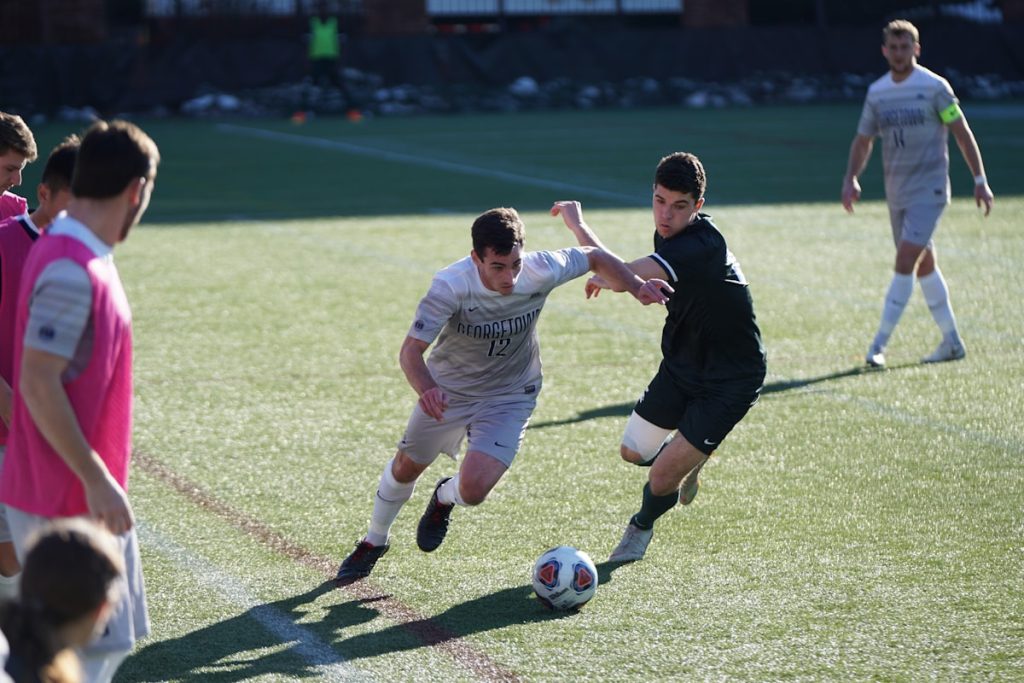
A midfielder in soccer operates between the defenders and forwards, linking the team’s defensive and attacking play. The position requires more than passing: midfielders help win the ball, control the tempo, create opportunities and provide support across the field.
The Main Responsibilities of a Soccer Midfielder
The exact duties depend on the player’s role and the team’s formation, but most midfielders contribute in several areas.
Connecting defense and attack
Midfielders offer passing options to defenders and help move the ball toward the forwards. They may receive a pass under pressure, turn into space, switch play to the opposite flank or make a forward pass between defenders. This link-up work is why midfielders are often described as the engine of a soccer team.
Winning and retaining possession
A midfielder may tackle, intercept passes, press an opponent or recover a loose ball. After winning possession, the player must usually make a quick decision: keep the ball, pass forward, play safely to a teammate or carry it into open space.
Creating scoring chances
Attack-minded midfielders provide through balls, crosses, cutbacks and passes around the edge of the penalty area. They can also make late runs into the box to take a shot. Their creativity often helps forwards receive the ball in more dangerous positions.
Supporting the defense
When the opposition has the ball, midfielders help protect the space in front of the defenders. They may track opposing players, block passing lanes, cover a teammate who has moved forward and press the ball carrier. Defensive midfielders are especially important in preventing counterattacks.
Types of Midfielders and What They Do
There is no single midfielder position. Coaches assign different responsibilities based on the player’s strengths and the team’s tactical plan.
Defensive midfielder
A defensive midfielder, sometimes called a holding midfielder or number six, plays close to the back line. The role focuses on interceptions, tackles, covering defenders and starting attacks with accurate passes. A holding midfielder often stays behind more attacking teammates rather than making frequent runs into the penalty area.
Central midfielder
A central midfielder works in the middle of the pitch and usually contributes in both directions. This player may help circulate possession, support defensive pressure, carry the ball forward and arrive near the box. Central midfielders need strong awareness because they often receive the ball with opponents nearby.
Attacking midfielder
An attacking midfielder, often known as a number ten, plays closer to the forwards. The position focuses on chance creation, dribbling, combination play and shooting. Attacking midfielders look for pockets of space behind the opposition’s midfield and in front of its defenders.
Box-to-box midfielder
A box-to-box midfielder contributes near both penalty areas. The player may win the ball in one phase, carry it forward and then make a late run to support an attack. Stamina, timing and defensive discipline are essential because the role covers a large part of the field.
Wide midfielder
Wide midfielders operate near the touchlines and support both the full-back and the attack. Their duties can include crossing, carrying the ball, tracking opposing wide players and moving inside to create central passing options. In some formations, wide midfielders perform duties similar to wingers, but they usually have greater defensive responsibility.
How a Midfielder’s Role Changes by Formation
In a 4-3-3 formation, three central midfielders may divide into a holding player and two more mobile players. In a 4-4-2, the midfield often has two central players supported by wide midfielders. A 4-2-3-1 commonly uses two deeper midfielders behind an attacking midfielder.
Formations describe a starting shape, not a fixed position. During an attack, a midfielder may move wide to create space, drop between defenders to help build play or enter the penalty area. During defensive phases, the same player may fall back into a compact line or press high up the pitch.
Important Skills for Midfielders
- First touch: Controlling the ball quickly creates time for the next action.
- Passing: Short, long, diagonal and forward passes help a team progress.
- Scanning: Looking over both shoulders before receiving the ball helps a player recognize pressure and passing options.
- Ball carrying: Dribbling into open space can move the team past an opponent.
- Defensive awareness: Reading danger helps a midfielder intercept passes and cover teammates.
- Stamina: Many midfield roles require repeated movement between defense and attack.
- Decision-making: Choosing when to pass, dribble, press or slow the game is central to the position.
In simple terms, a soccer midfielder helps the team function as a connected unit. The player’s work may not always appear in the goal statistics, but controlling space, recovering possession and choosing the right pass can determine how effectively the team attacks and defends.