Tennis Court Surfaces Explained: Speed, Bounce and Playing Style
Tennis court surfaces change the pace of rallies, the height of the bounce, player movement and even the tactics that work best. Here is how clay, hard, grass and carpet compare.
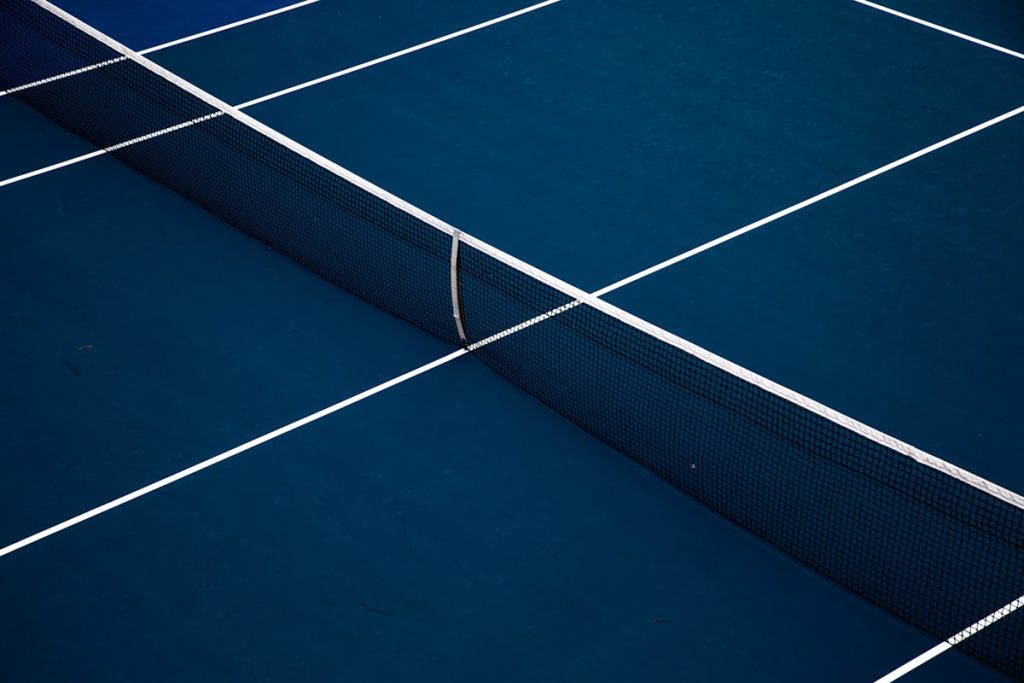
A tennis ball can feel entirely different from one court to the next. On red clay, it slows after landing and often rises high. On grass, it skids through the surface and rewards quick reactions. Hard courts sit between those extremes, while indoor carpet can create a fast, low-bouncing contest. The court beneath the players is not background detail; it helps shape the match.
How tennis court surfaces change play
The biggest differences come from three connected factors: ball speed after the bounce, bounce height and the amount of grip available for movement. Surface materials, texture, moisture, temperature and court construction all influence those characteristics.
A slow court gives the receiver more time to reach the ball and usually produces longer rallies. Players may need to build points patiently, create angles and use heavy topspin to push an opponent away from the baseline. A fast court shortens reaction time, makes serve placement more valuable and can reward first-strike tennis.
The bounce matters just as much as speed. A high, predictable bounce can help a player who likes to strike from behind the baseline, while a low skid is often more comfortable for someone who takes the ball early. Footwork changes too: clay allows controlled sliding, whereas grass and many hard courts demand sharper braking and direction changes.
Clay courts: slow rallies and a high bounce
Clay courts are made from compacted layers of crushed stone, brick or similar mineral material. The surface generally slows the ball and produces a relatively high bounce, especially when a player adds topspin. The loose top layer also allows competitors to slide into shots and recover across the court.
These conditions favour patience, consistency and point construction. A clay-court specialist may use deep topspin, angled groundstrokes and repeated movement from side to side rather than relying on a single powerful shot. Break points can be difficult to convert because the returner has more time to defend.
Clay is not always the same from venue to venue. Court composition, watering, brushing and weather can make one clay court quicker or heavier than another. Damp conditions usually make the surface slower and reduce the liveliness of the ball, while dry conditions can produce a livelier contest.
Hard courts: the adaptable middle ground
Hard courts typically use an asphalt or concrete base covered by layers of acrylic paint and cushioning material. They offer a firm, consistent playing area and are widely used because they can support many styles of tennis.
The speed of a hard court depends on its construction, coating, texture and maintenance. Some courts produce a medium pace with a fairly even bounce; others are deliberately made faster or slower. Compared with clay, hard courts usually give players less time to defend, but they are often less skidding and less extreme than grass.
Because hard courts do not strongly favour one type of rally, successful players often combine solid baseline play with the ability to attack. Serving, returning, transition shots and movement all matter. The trade-off is physical: the firm surface can place substantial stress on the knees, ankles and hips, particularly during frequent tournaments or long training sessions.
Grass courts: low bounce and quick reactions
Grass is the traditional fast tennis surface. The ball tends to move quickly after the bounce and stay relatively low, although modern grass courts can play differently depending on the variety of grass, soil firmness, moisture and wear.
Low bounce can make it harder to swing comfortably from high contact points. Players who take the ball early, serve accurately and finish at the net may gain an advantage. Short points are more common, and a good return can be especially valuable because there may be little time to recover after the serve.
Grass also changes as it is used. Baseline areas can become worn, producing less predictable footing and a slightly different response from the centre of the court. Rain and dampness affect both the ball and the player’s ability to move safely, which is why grass tournaments often require careful scheduling and maintenance.
Carpet and synthetic courts
Carpet courts use textile or synthetic materials laid over a firm base. They are more common indoors and can be fast, with a comparatively low bounce. The exact playing characteristics depend heavily on the material and installation.
Fast indoor surfaces reward a reliable serve, an aggressive return and compact swings. Players have less time to prepare, so taking the ball early can be more effective than building long baseline exchanges. Some synthetic outdoor courts are designed to imitate the feel of hard courts while adding cushioning or improving drainage.
Because carpet systems vary considerably, the name alone does not tell a player everything about the court. Surface pace, bounce, grip and shoe compatibility should be checked before a match or training session.
Which tennis surface suits different playing styles?
Baseline players who rely on topspin and patient construction often enjoy clay because the slower pace gives them time to create openings. Aggressive baseliners may prefer a medium-speed hard court, where powerful groundstrokes remain effective without making every rally a short exchange.
Serve-and-volley players and competitors who take the ball early can benefit from grass or a fast indoor surface. All-court players often adapt well to hard courts because the conditions support both extended rallies and forward movement.
These are tendencies rather than rules. A strong returner can neutralise a fast court, while a disciplined attacker can succeed on clay. Technique, fitness, weather, ball type and the opponent’s habits can matter as much as the surface itself.
Choosing tennis shoes for the court
Tennis shoes should match the surface because the sole pattern affects traction and movement. Clay-court shoes usually have a herringbone tread that helps with controlled sliding and sheds loose material. Hard-court shoes need durable outsoles and cushioning to handle repeated stops on a firm base.
Grass-court footwear generally uses small rubber studs or pimples to provide grip without damaging the court. All-court shoes can work on several surfaces, but they may not offer the same level of traction or durability as a shoe designed for a specific court.
Using the wrong sole can reduce confidence and increase the risk of slipping. Players should also follow venue rules, since some clubs restrict hard-court shoes on clay or require non-marking footwear indoors.
How court pace is assessed
Surface speed is often discussed through the International Tennis Federation’s court pace classification, which is based on how the ball behaves after contact with the court. The rating is useful for comparing playing conditions, but it does not capture every detail a player feels during a match.
Bounce height, grip, temperature, altitude, ball selection and humidity can change the experience. A court that appears medium-paced in cool conditions may feel much quicker in warm, dry weather. Players preparing for competition should practise in conditions that resemble the tournament rather than relying on the surface label alone.
Why the surface matters beyond tactics
Court type influences maintenance, construction cost, injury considerations and the rhythm of a tennis season. Clay requires regular watering, brushing and levelling. Grass demands intensive mowing and careful protection from wear. Hard courts are relatively consistent but may need resurfacing as cracks, fading and loss of cushioning develop.
For players, the best preparation is specific practice. Adjust rally height and patience on clay, shorten the backswing on fast courts, and rehearse low-ball footwork on grass. Once the speed, bounce and grip of a surface become familiar, tactics become clearer and movement becomes more efficient.