Man-to-Man Defense Explained: Principles, Positions and Strategies
Learn how man-to-man defense works in basketball, including defensive assignments, positioning, help defense, communication, strengths, weaknesses and practice drills.
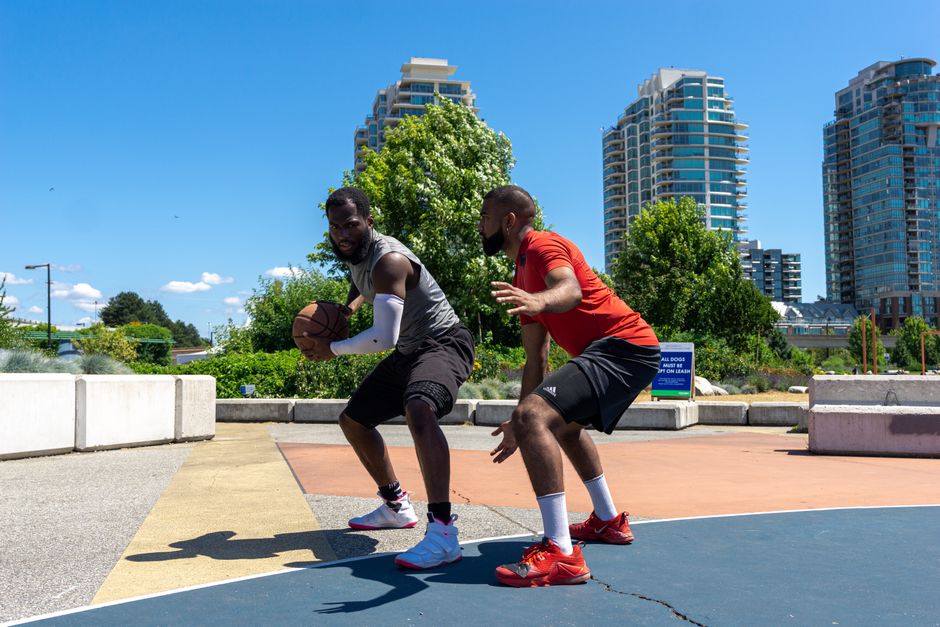
Man-to-man defense is a basketball defensive system in which each player is responsible for guarding a specific opponent. Instead of protecting a fixed area of the court, defenders track their assignments while also helping teammates when the ball moves or an attacker beats the first line of defense.
How man-to-man defense works
Before a possession begins, each defender identifies the player they are guarding. The on-ball defender pressures the player with the ball, while off-ball defenders position themselves between their assignment and the basket. Their stance and distance change according to the location of the ball, the strength of the offensive player and the threat of a pass or cut.
A basic man-to-man defensive setup has three connected responsibilities:
- On-ball defense: The defender stays between the ball handler and the basket, limits driving lanes and contests shots without reaching unnecessarily.
- One-pass-away defense: A defender whose assignment is close enough to receive a direct pass stays ready to deny the pass while remaining able to provide help.
- Help-side defense: Defenders farther from the ball move toward the paint and stay alert for drives, cuts and passes across the court.
Good man-to-man defense is not simply one player following another. It is a team system based on spacing, communication, help rotations and recovery. Every defender must know both their individual assignment and the next rotation if the offense creates an advantage.
Defensive stance and positioning
The on-ball defender should use a balanced stance with bent knees, active hands and weight on the balls of the feet. The body is usually angled to influence the ball handler toward a less dangerous direction, such as the sideline or a weaker hand. The defender should slide rather than cross their feet and avoid lunging at the ball.
Distance depends on the threat. A strong outside shooter may require tighter coverage, while a player who is not a reliable shooter can be given more space to discourage a drive. The defender must still be close enough to contest a shot and recover to a pass.
Off-ball positioning is often described with the idea of seeing both the ball and the player being guarded. A defender should not turn completely toward either one. This position makes it easier to detect backdoor cuts, stunt at a driver and rotate when a teammate needs help.
Communication and common rotations
Communication is essential because offensive actions are designed to force defenders into decisions. Players should call out screens, cutters, switches, drives and open shooters before the threat develops. Clear, early communication reduces confusion and prevents two defenders from guarding the same attacker.
When an offensive player drives past the on-ball defender, a help defender may step into the lane. The original defender then recovers to the ball or rotates to another assignment. This sequence is often called help and recover. If the ball is passed out of the drive, defenders must close out under control, stopping the shooter without giving up another straight-line drive.
Screens require a team decision. Defenders may fight over the screen, go under it, switch assignments or briefly trap the ball handler. The choice depends on the opponent’s shooting ability, the location of the screen and the team’s defensive rules. Switching can prevent an immediate advantage, but it may create a mismatch if a smaller player is left guarding a taller opponent.
Strengths and weaknesses of man-to-man defense
The main advantage of man-to-man defense is accountability. Each defender has a clear assignment, and the system can be adapted to the strengths and weaknesses of individual opponents. It also allows a team to pressure the ball, disrupt passing lanes and change its level of aggression without abandoning its basic structure.
Man defense can be vulnerable when players lose concentration, fail to communicate or are beaten off the dribble. Quick ball movement can create open shots if defenders help too far or recover too slowly. Strong screening teams can also produce mismatches and force repeated switches.
Because of these risks, effective man-to-man defense depends on more than individual athletic ability. The five defenders must maintain proper spacing, protect the paint, finish possessions with a defensive rebound and avoid unnecessary fouls.
Man-to-man defense compared with zone defense
In man-to-man defense, players primarily follow offensive assignments. In zone defense, each player is responsible for defending a specific area of the court. A zone can protect certain spaces and hide individual defensive weaknesses, while man defense generally offers more direct pressure on ball handlers and shooters.
Many teams use both systems during a game. A coach may start in man defense, change to a zone after a timeout or use a possession-based variation to disrupt the offense. Understanding the difference helps players recognize whether they should track a person, protect an area or do both during a transition.
Ways to improve man-to-man defense
Practice should connect footwork with decisions rather than isolate movement from game situations. Useful drills include closeouts to a controlled defensive stance, one-on-one containment from different angles, shell drill rotations and screen-defense exercises. Small-sided games are particularly effective because they require players to communicate and provide help under pressure.
Players can also improve by reviewing possessions and asking specific questions: Was the ball stopped early? Was the correct help position occupied? Did the defender recover to the shooter? Was the defensive rebound secured? These details reveal whether a breakdown came from footwork, positioning, communication or a missed rotation.