
Forehand vs Backhand: Key Differences, Strengths and When to Use Each
Learn how the forehand and backhand differ in tennis, including technique, power, control, movement and the situations where each shot is most effective.
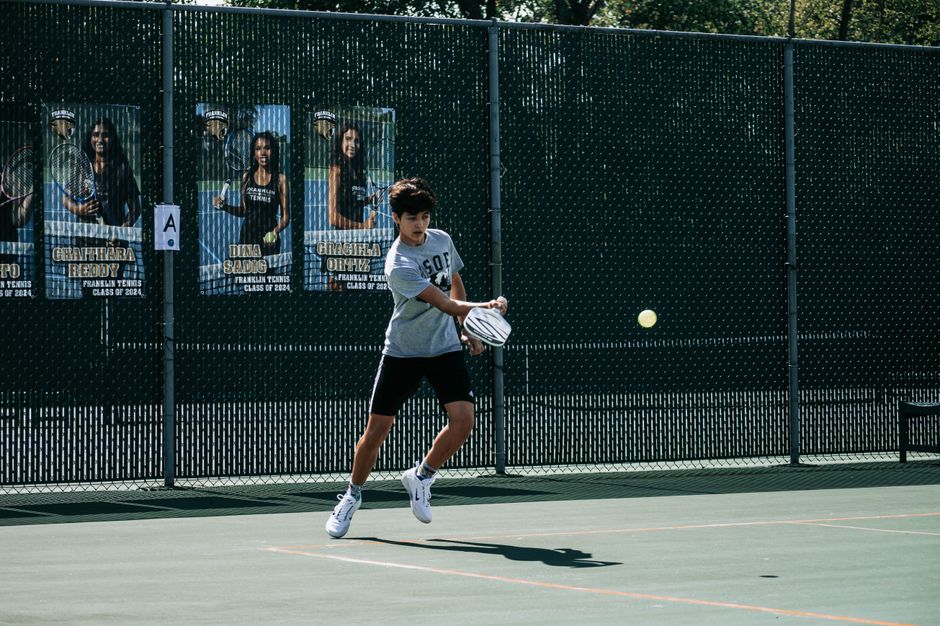
The main difference between a forehand and a backhand is the side of the body used to strike the ball. A forehand is hit on the dominant side of the body, usually with the palm or racket face moving forward naturally. A backhand is played across the body or on the non-dominant side, making timing, preparation and balance especially important.
Neither stroke is automatically better. A reliable forehand often produces more pace and topspin, while a well-developed backhand can provide accuracy, stability and a useful answer to shots aimed at a player’s weaker side. The best choice depends on the ball’s height, speed, direction and the player’s position on court.
Forehand vs backhand in tennis
In tennis, the forehand usually starts with the racket taken back on the dominant side. The player rotates the hips and shoulders, steps toward the ball and accelerates the racket through contact. Most players use a semi-western, eastern or continental variation of the grip depending on their preferred ball height and style.
The backhand requires the player to prepare earlier because the stroke begins across the body. A two-handed backhand uses the non-dominant hand to guide the racket and is common because it offers balance and control. A one-handed backhand gives greater reach and can create slice, disguise and attacking variety, but it generally demands more precise timing and strength.
| Feature | Forehand | Backhand |
|---|---|---|
| Contact side | Dominant side | Non-dominant side or across the body |
| Typical strength | Racket-head speed, topspin and attacking power | Stability, direction changes and defensive control |
| Preparation | Usually feels more natural to beginners | Requires earlier shoulder and racket preparation |
| Common variations | Flat drive, topspin shot and inside-out forehand | Two-handed drive, one-handed drive and backhand slice |
Which stroke is more powerful?
For most recreational tennis players, the forehand is the more powerful shot. The dominant arm can contribute more naturally, and the player can often rotate the body freely into the ball. This makes the forehand useful for attacking short balls, hitting heavy topspin and changing direction from the middle of the court.
A two-handed backhand can still generate significant pace because the second hand adds support and helps the player control the racket face. The backhand may become especially effective when the player takes the ball early and uses the legs and torso rather than relying only on the arms.
Power is not the only measure of an effective stroke. A controlled backhand placed deep near the baseline may be more valuable than a faster forehand that lands short or misses under pressure.
When to use the forehand and backhand
Players usually prefer the forehand when they have time to move around the ball, attack a shorter delivery or create a wide angle. An inside-out forehand, struck from the backhand corner toward the opponent’s backhand side, is a common tactical pattern in tennis.
The backhand is often used when the ball arrives directly on the non-dominant side or when there is not enough time to run around it. It can also be the better option for returning a fast serve, defending against a deep ball and redirecting pace down the line.
- Use the forehand when you can set your feet, rotate fully and attack with topspin or pace.
- Use the backhand when the ball reaches the non-dominant side, arrives quickly or requires a compact, controlled response.
- Change direction carefully: a down-the-line shot needs good spacing and contact in front of the body on either wing.
Forehand and backhand technique fundamentals
Both strokes depend on early preparation, a stable base and contact in front of the body. The racket should not be pulled back so far that the swing becomes slow. Instead, players should turn the shoulders, keep the head steady and use the legs and trunk to support the stroke.
For a tennis forehand, the contact point is generally in front of the hitting hip. A low-to-high swing path helps produce topspin, while a more level path creates a flatter ball. On a two-handed backhand, the shoulders should turn together and the non-dominant hand should guide the forward swing. On a one-handed backhand, the player must extend through contact while maintaining balance and a firm wrist.
Footwork often explains the difference between a strong shot and a weak one. Small adjustment steps help the player arrive at the correct distance. Standing too close crowds the swing; standing too far away causes late contact and loss of control.
Forehand vs backhand in table tennis
The comparison changes slightly in table tennis because the ball travels faster, the stroke is shorter and players often stay close to the table. A table-tennis forehand usually allows a larger body rotation and can produce heavy topspin. The backhand is more compact and is frequently used for quick blocks, counterattacks and exchanges over the table.
In modern table tennis, the backhand is not simply a defensive stroke. Players use it to flick short serves, counter topspin and apply pressure at close range. The forehand remains important for powerful attacks, especially when the player has time to move around the backhand corner.
Which should you practise first?
Beginners should develop both strokes rather than building a game around only the forehand. A dependable backhand prevents opponents from targeting one predictable area, while a consistent forehand creates opportunities to take control of rallies.
Start with cross-court repetitions at moderate speed. Focus on contact height, balance and direction before adding power. Then practise serving or feeding balls to each side, moving back to the centre after every shot, and finishing points with a controlled change of direction. In tennis, include returns and defensive shots; in table tennis, add blocks and short-ball responses.