
Hardest Sports to Play: Physical, Mental and Technical Demands Compared
A rigorous comparison of the hardest sports to play, examining endurance, strength, coordination, risk, decision-making and the skills required across different disciplines.
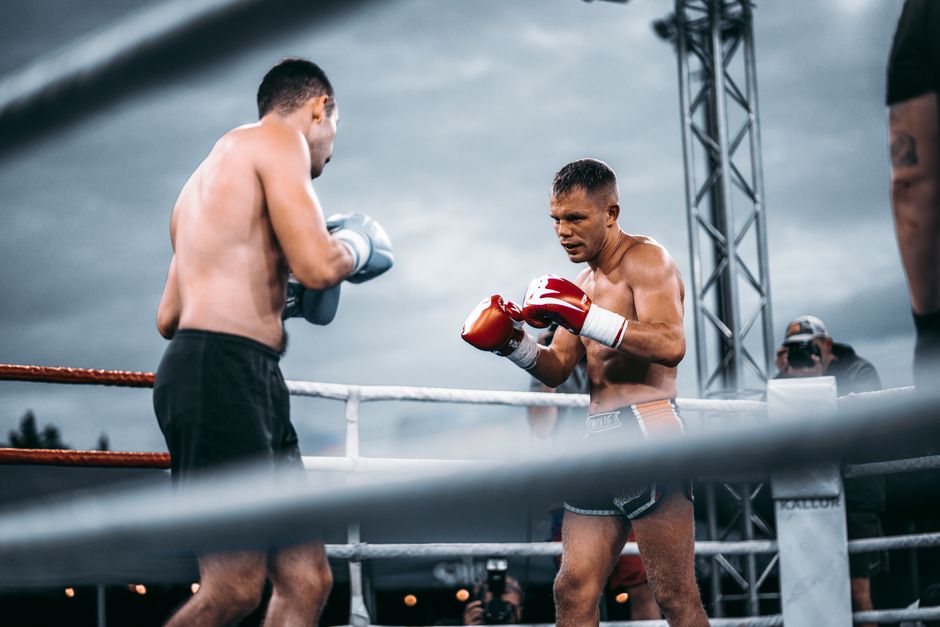
Determining the hardest sports to play is not as simple as ranking athletes by fitness. Different sports demand different combinations of endurance, explosive power, flexibility, coordination, tactical awareness, pain tolerance and psychological control. A marathon tests sustained aerobic performance, while boxing adds direct physical contact, rapid decisions and the need to perform under threat.
The most difficult sports usually combine several demanding attributes rather than relying on one exceptional quality. The comparison below focuses on the physical and technical requirements of competition, while recognising that difficulty varies with position, event distance, rules and level of play.
How to compare the hardest sports to play
A useful comparison starts with the type of difficulty involved. Endurance sports require athletes to maintain output for a long period, often while managing fatigue, hydration and pacing. Power sports depend on producing force quickly. Skill-based disciplines may involve thousands of hours of technical practice before an athlete can perform reliably under pressure.
Several other factors also change the assessment:
- Energy-system demands: Some sports repeatedly alternate between sprinting and recovery, while others require a steady aerobic effort or short bursts of maximal power.
- Technical precision: Sports such as gymnastics, diving and figure skating punish small errors in timing, body position or balance.
- Decision-making: Team and combat sports require athletes to interpret opponents, space and changing situations in real time.
- Contact and risk: Rugby, ice hockey, boxing and mixed martial arts add collisions, impact and injury management to the physical workload.
- Environmental conditions: Open-water swimming, cycling, rowing and mountaineering can be affected by temperature, wind, water, altitude and terrain.
- Competition duration: A sport can be difficult because of a single intense effort or because performance must remain accurate over several hours or days.
These criteria explain why there is no universally accepted hardest sport in the world. A sport that is most difficult for an endurance athlete may not be the most difficult for a gymnast, boxer or football player.
Sports often considered the hardest to play
Boxing and mixed martial arts
Combat sports combine conditioning with technical execution under direct pressure. Boxers must generate force, move efficiently, defend against strikes and make tactical decisions while tired or hurt. Mixed martial artists add wrestling, grappling, kicking and submission techniques, creating a broader technical workload.
The difficulty is not limited to physical exertion. Athletes must control fear, anticipate an opponent’s movement and maintain concentration after taking impact. Training can be physically demanding even when the contest itself lasts only a few rounds. Weight management, injury risk and the need to remain composed in an unpredictable environment make combat sports strong candidates for the hardest sports to play.
Gymnastics
Gymnastics demands strength relative to body weight, flexibility, balance, spatial awareness and exceptional control. Athletes must execute complex movements in a narrow time window, often while rotating or moving upside down. A routine may last only a short time, but every landing and transition requires precise positioning.
Gymnastics is also difficult because many skills are interconnected. A weakness in shoulder mobility, core control or landing technique can affect several events. The sport has a steep technical learning curve, and errors can carry a meaningful risk of injury.
Triathlon
Triathlon combines swimming, cycling and running in one continuous event. Each discipline places different demands on the body, and athletes must manage the transitions between them. Swimming requires technique and efficient breathing, cycling adds sustained power and pacing, and running tests the ability to maintain form after substantial fatigue.
Long-distance triathlon is especially demanding because nutrition, fluid intake, heat management and pacing can determine the result as much as raw fitness. An athlete who starts too aggressively may lose performance later, while a poor transition can erase the advantage gained during an entire discipline.
Wrestling
Wrestling requires repeated bursts of strength, balance, speed and anaerobic endurance. Competitors constantly fight for leverage and position, using the legs, hips, back, shoulders and grip. Unlike a weightlifting attempt, the movement is resisted by an opponent who is actively trying to disrupt technique.
The sport also involves high cognitive demand. Wrestlers must identify openings, anticipate attacks and choose when to conserve energy. Training and competition can be affected by weight-class requirements, making recovery and nutrition important parts of performance.
Rowing
Rowing is often underestimated because the movement appears repetitive. Competitive rowing requires high aerobic capacity, leg and hip power, trunk stability, rhythm and technical consistency. Athletes must apply force in the correct sequence while matching the timing of the crew.
At sprint-race distances, rowers sustain an extremely demanding effort with limited opportunity to recover. Longer events add pacing and endurance requirements. Small technical losses repeated over many strokes can have a significant effect on boat speed.
Ice hockey
Ice hockey combines skating ability, acceleration, balance, puck control, passing, shooting and tactical awareness. Players perform these skills on a slippery surface while changing direction at speed and managing physical contact. Shifts are short and intense, but the repeated efforts create considerable fatigue over a game.
The difficulty also comes from the speed of the environment. Players have little time to process a pass, avoid a check or select a shooting option. The need to skate efficiently while making decisions distinguishes hockey from many field-based team sports.
American football
American football contains several different physical profiles. Linemen need short-range power and leverage, receivers require acceleration and catching skill, running backs combine speed with contact tolerance, and quarterbacks must read defensive structures while executing under pressure.
The sport is difficult because explosive efforts, collisions and tactical preparation occur together. Individual plays may be brief, but athletes must repeatedly produce force and absorb contact. Position-specific demands mean that there is no single physical template for a football player.
Association football
Association football requires players to run for long periods while repeatedly accelerating, decelerating, changing direction and controlling the ball. The technical challenge is heightened by defensive pressure and limited time on the ball. Players must scan the pitch, predict movement and select an action before receiving a pass.
Different positions create different demands. Midfielders may cover large distances and participate in both attack and defence, while forwards rely more heavily on explosive movement and finishing. Goalkeepers face a separate combination of reaction speed, jumping, positioning and decision-making.
Tennis
Tennis combines repeated sprinting with precise racket skills and tactical planning. Players must reach the ball, stop, recover and change direction while maintaining control of the stroke. A match can last for several hours, and the physical workload is influenced by surface, playing style and rally length.
The mental demand is significant because each point is a separate tactical problem. Players must manage score pressure, identify patterns in an opponent’s game and maintain technical accuracy despite fatigue. Singles tennis is especially demanding because the athlete covers the court alone.
Distance running and ultramarathons
Distance running appears technically simple, but elite performance depends on efficient movement, aerobic capacity, muscle durability and strict pacing. Marathon runners must maintain a high percentage of their maximum sustainable effort for an extended period. Ultrarunners add much longer duration, terrain changes, sleep disruption and nutrition problems.
The primary difficulty is managing the gradual accumulation of fatigue. Runners must distinguish between discomfort that can be managed and symptoms that may signal injury, heat illness or dangerous dehydration. Terrain and weather can alter the demands substantially.
Water polo
Water polo combines swimming, wrestling, throwing and tactical play. Players must tread water continuously, often using an eggbeater kick to stay elevated, while passing or shooting with one hand. They cannot rely on the floor of the pool for support, which increases the cost of every movement.
Contact frequently occurs below the surface and may be difficult for officials to observe. The sport therefore requires strength, spatial awareness and the ability to make decisions while breathing is restricted and the body is already fatigued.
Why rankings of difficult sports remain subjective
A ranking changes depending on the question being asked. If the measure is maximum aerobic endurance, triathlon and ultradistance events are likely to rise. If technical complexity and precision are prioritised, gymnastics, diving and figure skating become stronger candidates. If contact, fear management and tactical uncertainty are included, boxing, wrestling and rugby are difficult to separate.
Participation level also matters. Recreational play and elite competition are not equivalent. A beginner may find tennis technically frustrating because basic timing is unfamiliar, while an experienced player may consider the main challenge to be endurance and tactical consistency. At professional level, nearly every sport requires years of specialised training and finely developed physical qualities.
Team sports create another complication. A player’s workload depends on position, tactics and playing time. Comparing a goalkeeper with a midfielder, or a hockey defenceman with a forward, can be more informative than treating the entire sport as one physical category.
Common misconceptions about the hardest sports
High endurance does not automatically mean greater difficulty. A long event may be physically exhausting, but a shorter sport can demand more explosive power, technical precision or exposure to contact. Duration is only one measure.
Appearance can be misleading. Sports that look slow or repetitive may require intense internal effort and precise mechanics. Rowing and wrestling are examples in which the visible movement does not fully reveal the workload.
Strength alone is not enough. Athletes must usually apply strength at the correct time and in the right direction. A technically weaker athlete may be less effective even if they can produce more raw force.
Risk and difficulty are not identical. A sport may carry a high injury risk without requiring the broadest range of physical and technical abilities. Conversely, a technically difficult sport may have comparatively limited contact.
What makes a sport genuinely difficult?
The hardest sports to play tend to combine multiple constraints: high physical output, complex technique, rapid decisions, limited recovery and consequences for mistakes. Boxing, gymnastics, triathlon, wrestling, hockey, tennis, water polo and several forms of football all meet different versions of this description.
The most defensible conclusion is therefore not a single universal ranking. Difficulty should be assessed against clear criteria and the specific event or position being compared. That approach gives a more accurate picture than judging a sport solely by distance, visible contact or the amount of equipment involved.