What Is the Three-Second Rule in Basketball?
The three-second rule prevents offensive players from staying too long in the lane. Learn how the rule works, when the count starts, and how NBA and FIBA interpretations differ.
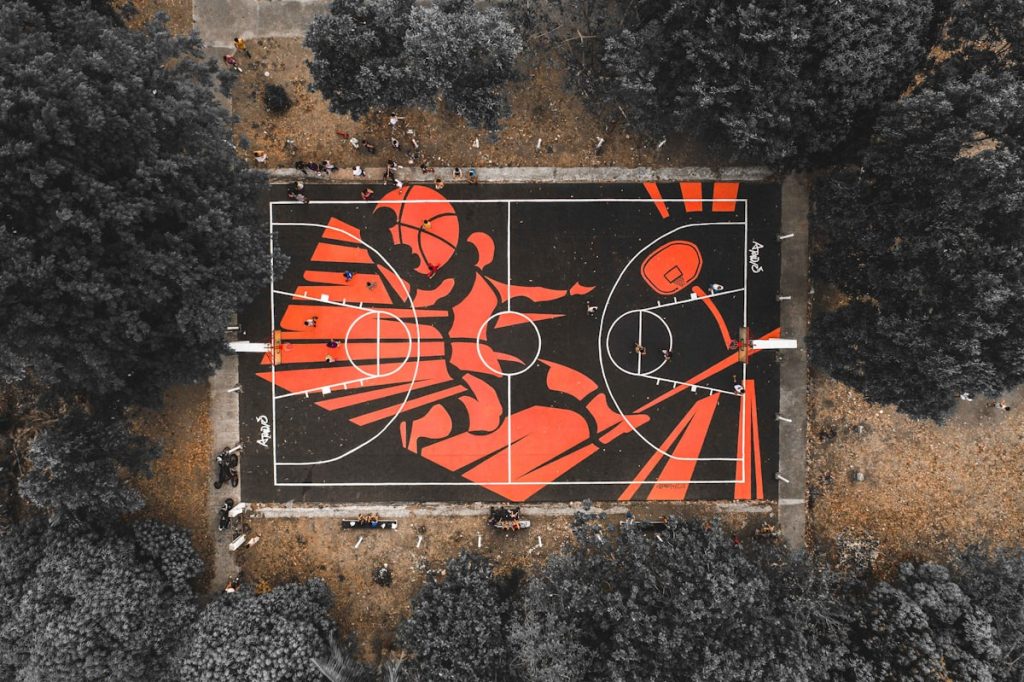
A basketball player can step into the painted lane, receive a pass, and score—but cannot simply stand there indefinitely. The three-second rule limits how long an offensive player may remain in the key while their team controls the ball in the frontcourt.
The rule is designed to stop attackers from camping near the basket. It keeps the lane open, encourages movement, and gives defenders a fairer chance to protect the rim. In most common explanations, “three seconds” refers to the offensive three-second violation.
How the offensive three-second rule works
Under NBA rules, an offensive player may not remain in the free-throw lane, also called the paint or key, for more than three consecutive seconds while their team has control of a live ball in the frontcourt.
The count applies to a player whose team is controlling the ball, not to every player on the court. A player may move through the lane, cut toward the basket, or briefly occupy the area while making a legitimate attempt to leave. The violation occurs when the player stays beyond the permitted time without a qualifying reason.
To avoid the violation, the player generally needs to establish both feet outside the lane. Merely touching the boundary line may not be enough, because the lane lines are treated as part of the painted area. Once the player leaves properly, they can later re-enter and begin a new count.
When does the three-second count start?
The count begins when the offensive team has control of the ball in the frontcourt and an offensive player is in the restricted lane area. It is not normally based on the total time a player has spent near the basket during a possession before team control is established.
The count ends or is interrupted when the team loses control, a shot is released, or the player leaves the lane in the required way. If the ball is in the air during a field-goal attempt, the offensive three-second restriction no longer applies to that possession. The count can also be stopped when a player is actively leaving the lane rather than remaining stationary.
For example, a center may post up in the paint, receive the ball, and make a move to the basket. That is legal if the player does not stay in the lane too long before the shot or move. A center who holds position under the rim while teammates pass the ball around the perimeter risks an offensive three-second call.
What is the penalty for an offensive three-second violation?
In the NBA, an offensive three-second violation results in a turnover. The opposing team receives the ball for a throw-in from the sideline at the free-throw line extended, subject to the applicable playing rules.
There is no free throw for the offensive team’s violation. The practical cost is lost possession, which can be especially damaging when a player is occupying the best position near the basket and the offense is trying to create a scoring chance.
Is there a defensive three-second rule?
Yes, but the answer depends on the competition. The NBA has a defensive three-second rule. A defender cannot remain in the lane for more than three consecutive seconds unless the defender is actively guarding an opponent.
Active guarding generally means the defender is close enough and positioned to respond to an offensive player. A defender cannot simply stand in the paint as a permanent rim protector while ignoring the matchup. The rule is one reason NBA defenses often show help position briefly before stepping out or directly engaging an opponent.
An NBA defensive three-second violation gives the offensive team a technical free throw, and the offense retains possession. This is different from an offensive three-second violation, which produces a turnover.
Does FIBA use the same three-second rule?
FIBA basketball uses an offensive three-second restriction, but it does not use the NBA-style defensive three-second rule. Under FIBA rules, a player from the team in control of the ball cannot remain in the opponents’ restricted area for more than three consecutive seconds while the team controls the ball in the frontcourt.
That difference can change defensive tactics. In international basketball, a defender may remain near the basket for longer than three seconds if the defender is otherwise legally positioned. In the NBA, the same action may draw a defensive three-second violation if the defender is not actively guarding an opponent.
Common situations that cause confusion
Standing near the lane is not always a violation. The three-second rule concerns the defined restricted lane, not every spot close to the basket. A player outside the paint can remain there without triggering an offensive three-second call, although other rules may still apply.
A shot attempt ends the count. Once the ball has been released on a field-goal attempt, the offensive three-second restriction is no longer the issue for that possession. A player may still be called for other violations, such as offensive goaltending or illegal contact.
The ball does not have to enter the paint. The count is connected to team control and the player’s location. An offensive player can be in the key while the ball is held outside the three-point line and still be called for three seconds.
Cutting through the paint is usually legal. A player who enters the lane while making a genuine effort to leave is treated differently from a player who settles there. Referees consider the player’s movement and whether the player is actively trying to clear the area.
Why the rule matters tactically
The three-second rule shapes spacing on offense. Post players must time their cuts and seals, while perimeter players need to avoid standing in the paint as they wait for a pass. Good offenses use the lane briefly, then move defenders with cuts, screens, and changes of position.
On defense, the NBA version limits how long a help defender can remain near the rim without a direct matchup. It encourages defenders to rotate, stunt toward the ball, and recover instead of building an unrestricted wall under the basket.
In short, the three-second rule prevents prolonged occupation of the key. The offensive version applies in major basketball formats, while the defensive version is competition-specific—most notably part of NBA rules but not the standard FIBA game.