How to Improve Balance for Sports: Training Principles and Practical Exercises
Learn how balance works in sport, which exercises improve stability and coordination, and how to apply balance training to running, football, basketball, tennis, and other activities.
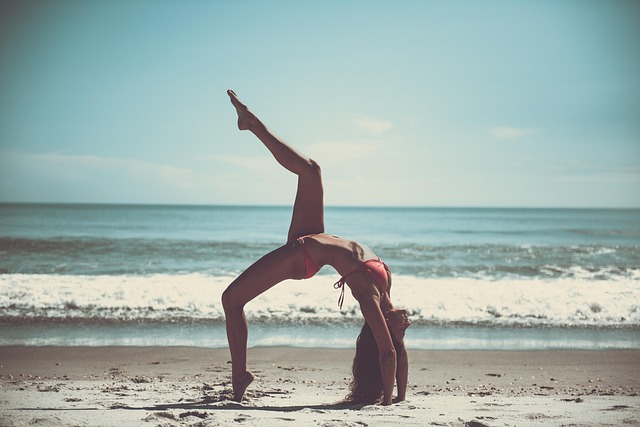
Balance is the ability to control the body’s position while standing still or moving. In sport, it depends on cooperation between the eyes, inner ear, muscles, joints, and nervous system. Good balance helps an athlete absorb force, change direction, maintain control during contact, and produce movement from a stable base.
Improving balance for sports is not simply a matter of standing on an unstable surface. The most useful programme combines single-leg control, trunk strength, lower-body mobility, coordination, and sport-specific movement. Training should also progress from slow, predictable tasks to faster actions that resemble competition.
What affects balance in sport?
Balance has both static and dynamic components. Static balance means maintaining a position without unnecessary movement, such as holding a single-leg stance. Dynamic balance means controlling the body while walking, landing, cutting, reaching, or responding to an opponent. Most field, court, and combat sports place greater demands on dynamic balance.
The body receives information from three main systems. Vision helps identify the body’s position in relation to the surroundings. The vestibular system in the inner ear detects head movement and orientation. Proprioception provides information from muscles, tendons, ligaments, and joints. Balance exercises can challenge one or more of these systems, but removing visual information or using unstable equipment should be done progressively rather than treated as automatically superior.
Strength and mobility also influence stability. Weak hip muscles may make it harder to control the knee during a landing, while restricted ankle mobility can alter foot placement and squat mechanics. Fatigue, poor footwear, previous injury, unfamiliar surfaces, and rapid changes of direction can further reduce postural control.
Exercises that improve balance and stability
Single-leg stance
Stand near a wall or sturdy support and lift one foot from the floor. Keep the pelvis level, maintain a soft bend in the standing knee, and avoid gripping the toes. Begin with 20 to 30 seconds per side. Progress by turning the head slowly, reaching with the free leg, or performing the exercise on a firm cushion. Do not progress by closing the eyes until the basic version is controlled and a safe support is available.
Single-leg reach
From a stable standing position, balance on one leg while reaching the other leg backward, sideways, and diagonally. Keep the standing knee aligned broadly with the second toe and return to the starting position without rushing. This develops control through the ankle, knee, hip, and trunk and has more movement relevance than a stationary balance hold.
Split squats and step-downs
Split squats build strength while the legs work in different positions. Step-downs from a low platform add control during lowering, which is useful for deceleration and landing. Use a height that allows the knee and pelvis to remain controlled. A knee that moves slightly inward is not automatically harmful, but repeated loss of control, pain, or collapse under load indicates that the exercise should be made easier.
Single-leg hinges
A single-leg Romanian deadlift trains balance while the hip muscles control the trunk and leg. Hinge forward from the hip with a long spine, allow the free leg to extend backward, and return slowly. Hold a light weight only after the unweighted movement is consistent. This exercise is particularly relevant to running, jumping, skiing, and sports that require force production from one leg.
Landing and deceleration drills
Jump from a low height and land quietly with both feet, then progress to controlled single-leg landings if appropriate. Bend at the hips, knees, and ankles and stabilise before moving again. Later, add a small lateral jump, a forward hop, or a planned change of direction. The goal is not simply to land softly; it is to control the centre of mass and prepare for the next action.
Balance with ball or reaction tasks
Standing on one leg while passing, catching, dribbling, or reacting to a visual cue combines postural control with attention. This is closer to the demands of football, basketball, handball, tennis, and hockey than isolated balance work. Start with predictable passes and a stable surface before introducing movement, an opponent, or an unexpected direction.
How to apply balance training to different sports
Runners often benefit from single-leg strength, ankle control, and landing mechanics because each stride briefly places the body on one leg. Football and rugby players need to combine balance with acceleration, contact, kicking, and rapid changes of direction. Basketball players should include controlled jump landings, defensive slides, and stops from different speeds.
Tennis and badminton require balance during split steps, lunges, and recovery to the centre of the court. Skiers and snowboarders need trunk control and the ability to adjust to changing surfaces. Combat-sport athletes may need balance while producing force, absorbing contact, or recovering after an opponent disrupts their stance. The exercise should resemble the position, speed, force, and decision-making demands of the sport rather than merely using specialised equipment.
How often should athletes train balance?
Balance can be practised two to four times per week in short sessions or as part of a warm-up. A typical session might include two or three exercises performed for two to four sets, with enough rest to preserve concentration and movement quality. Balance work is usually most effective before exhausting conditioning drills, when the athlete can respond accurately.
Progress one variable at a time. Useful progressions include reducing hand support, increasing the range of movement, adding resistance, changing direction, increasing speed, using a less predictable stimulus, or performing the task after a sport-specific movement. Unstable boards and soft surfaces can be included, but they may reduce the amount of force an athlete can produce and do not replace strength training on a firm surface.
Common mistakes and safety considerations
Holding a difficult position while wobbling continuously is not necessarily productive balance training. Reduce the difficulty if the athlete cannot maintain alignment or must repeatedly step off. Balance exercises should be performed in a clear area, away from sharp edges and traffic, with a stable support nearby. Bare feet can improve sensory feedback for some drills, but appropriate sport footwear is more relevant when preparing for competition.
Pain, swelling, repeated giving-way, dizziness, numbness, or a sudden decline in coordination should not be ignored. Athletes returning from an ankle, knee, hip, back, or head injury should follow the advice of a qualified clinician. Balance training can support rehabilitation, but it cannot diagnose the cause of poor stability or replace a properly assessed return-to-sport plan.
How to measure improvement
Track more than the time spent standing on one leg. Useful measures include the number of controlled single-leg reaches, landing quality, ability to stop and change direction, symmetry between sides, and performance under mild fatigue. A simple test should be repeated under similar conditions, because footwear, surface, warm-up, and tiredness can substantially affect the result.
Improvement is meaningful when better balance transfers to sport: fewer uncontrolled steps, more reliable landings, stronger positioning during contact, or quicker recovery after a cut. A longer balance hold on an unstable surface may be interesting, but it is less valuable if movement quality and sporting performance do not improve.