How Do Penalty Shootouts Work in Football?
Learn how football penalty shootouts decide tied knockout matches, including the five-kick format, sudden death, player eligibility and goalkeeper rules.
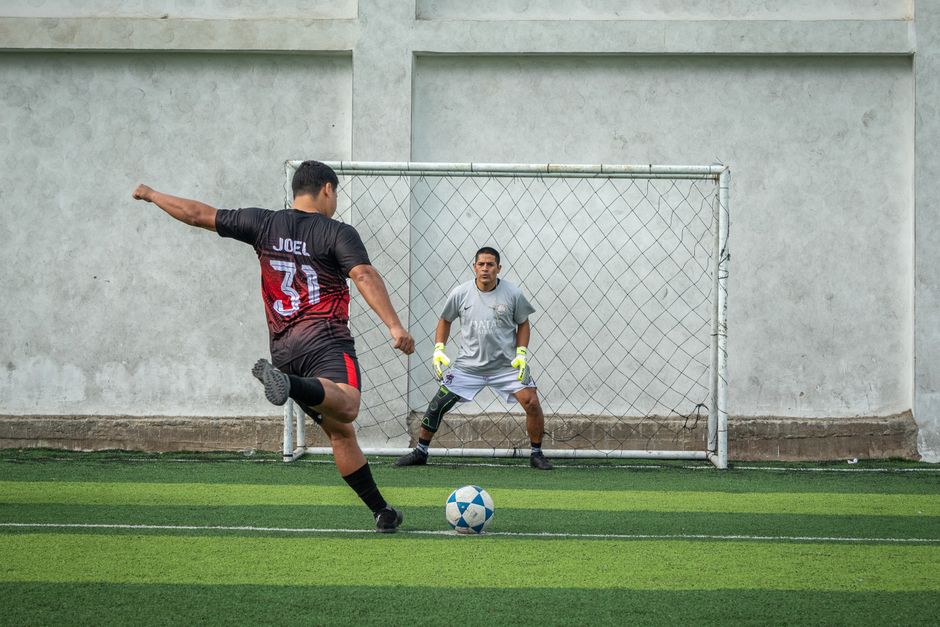
A football penalty shootout is used to decide a winner when a knockout match remains level after extra time, if the competition rules call for penalties. It is not an extension of normal play: the match has ended, and the result is decided through a sequence of one-on-one kicks from the penalty mark.
How a football penalty shootout is decided
Before the kicks begin, the referee conducts a coin toss. The winning captain chooses which goal will be used, unless safety, pitch conditions or similar factors require the referee to select it. A second toss decides which team takes the first kick.
Each team initially takes five penalties. The teams alternate, with one player taking a kick for each side. The team that scores more goals after five kicks wins, but the shootout can finish earlier if one team has an unassailable lead. For example, if a team leads by four goals with only two kicks left for its opponent, the remaining kicks are unnecessary.
If the scores are level after both teams have taken five kicks, the shootout enters sudden death. The teams continue taking one penalty each until one side scores and the other fails to score in the same round. There is no fixed limit to the number of sudden-death rounds.
Who can take a penalty?
Only players who are eligible to participate at the end of the match can take part. In most competitions, that means players who were on the field when extra time ended, along with any permitted substitutions already made during the match. The goalkeeper is also eligible to take a kick, although teams usually select outfield players first.
Every eligible player must take a penalty before any player takes a second one. Once all eligible players have taken a kick, the order can be changed for another round. A team does not have to keep the same order during subsequent rounds.
If one team has more eligible players than the other, it must reduce its number to match the smaller squad before the kicks start. The captain tells the referee which players are excluded. This rule prevents a team with more players from having more available penalty takers during the rotation.
What the goalkeeper can and cannot do
The goalkeeper defending the goal must remain on the goal line, between the posts and facing the kicker until the ball is kicked. The keeper may move sideways along the line, but cannot distract the kicker unfairly or delay the kick.
The goalkeeper taking the penalty stands at the opposite end of the field with the other eligible players. A goalkeeper may take a kick if included in the order. If the goalkeeper cannot continue because of an injury, the competition rules and the Laws of the Game determine whether an eligible replacement can be used. A goalkeeper who is sent off cannot be replaced simply to continue the shootout.
Rules for taking each penalty
The ball is placed on the penalty mark, and the kicker must be clearly identified to the referee. The kick must move forward. The player cannot touch the ball again until another player has touched it, so a player cannot score directly from a rebound off the post or goalkeeper by immediately kicking the ball again.
The kicker may use a run-up and may disguise the direction of the shot, but deliberately stopping completely after the run-up to provoke the goalkeeper is an offence. Feinting during the run-up can also lead to a caution. The goalkeeper may move before the kick, but an offence can be punished if it affects the outcome.
A penalty is scored when the whole ball passes over the goal line, between the posts and under the crossbar, without an attacking offence. If the goalkeeper saves it, the ball hits the post and stays out, or the kick misses, that attempt does not count as a goal.
Common questions about penalty shootouts
Does a shootout count as part of the match score?
No. The match result is usually recorded as a draw after 120 minutes, followed by the shootout result. A competition may display a score such as 4–3 on penalties, but those kicks are separate from the goals scored during open play and extra time.
Can a substitute take a penalty?
A substitute can take a kick only if the player is eligible under the competition rules and was involved in the match in the permitted way. A player who was not eligible at the end of the match cannot be added simply because the shootout has begun.
What happens if a penalty hits the post and rebounds?
If the ball rebounds from the post or crossbar and the kicker touches it again before anyone else does, the referee stops play and awards an indirect free kick to the defending team. The kick is not retaken just because the ball rebounds into the field.
Can a team win before all five penalties are taken?
Yes. The referee stops the shootout when the other team can no longer catch up, even if some scheduled kicks remain. If the teams are level after the first five kicks, play continues with sudden death.