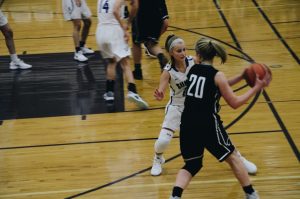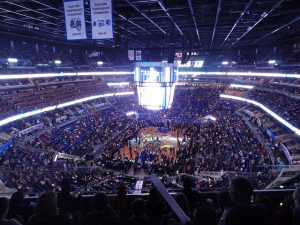
What Is a Shot Clock in Basketball? Rules, Timing and Violations Explained
A shot clock limits how long a basketball team can control the ball before attempting a shot. Learn how it works, when it resets and what happens after a violation.
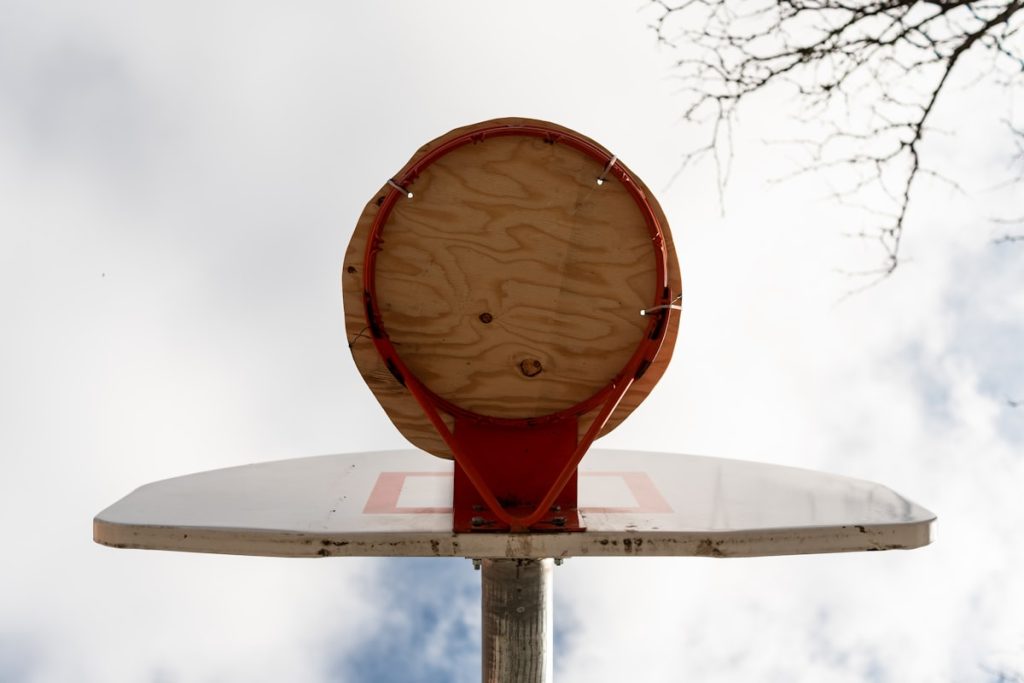
A shot clock is a countdown timer that limits the amount of time a basketball team may control the ball before attempting a field goal. It prevents a team from holding possession indefinitely and encourages continuous offensive play.
The clock does not usually require the shot to go in. The offense generally meets the requirement when the ball leaves the shooter’s hand before the countdown reaches zero and the shot either touches the basket or, under some rule sets, is otherwise judged to have been released legally. The precise timing and reset rules depend on the competition.
How the shot clock works
After a team gains control of the ball, the shot clock starts or continues to count down. Players must create a legal shot attempt before time expires. A shot attempt normally means the ball has left the shooter’s hand and is traveling toward the basket. A pass, dribble, pump fake or ball held in the shooter’s hand does not satisfy the requirement.
If the ball touches the rim, the offensive team may receive a new, longer possession period after securing the rebound, depending on the league’s rules. If the defense gains control, possession changes and the new offensive team receives a fresh shot-clock period. A successful basket also ends the possession and gives the other team the ball.
The shot-clock operator works with the referees and resets the display after events such as a change of possession, a basket or a qualifying defensive foul. The game officials have final authority if the timer, possession status or timing sequence is disputed.
What happens when the shot clock reaches zero?
If the offense has not produced a legal shot attempt before the shot clock expires, officials call a shot-clock violation. The opposing team is awarded possession, usually with a throw-in from a designated location. This is sometimes called a 24-second violation or a shot-clock turnover, although the exact time limit varies by competition.
A shot released before zero can still be unsuccessful without causing a violation. In many rule sets, the ball must then touch the rim or enter the basket for the attempt to count as a valid shot-clock play. If the ball misses the rim and the offensive team regains it, officials may call a violation rather than allowing the same possession to continue.
How long is a basketball shot clock?
The most familiar limit is 24 seconds. The NBA uses a 24-second shot clock, as do FIBA competitions and many professional leagues. College basketball in the United States uses a 30-second shot clock for both men’s and women’s games under current NCAA rules. Some youth, school and amateur competitions use different limits or do not use a shot clock at all.
Women’s college basketball adopted a 30-second clock, while men’s college basketball moved from a longer 35-second limit to 30 seconds. These changes were designed to increase offensive pace and reduce possessions in which a team could hold the ball for extended periods.
Because the rules are not universal, the competition’s rulebook matters. A phrase such as “24-second violation” is accurate in one league but may be wrong for a school or regional tournament using a different possession limit.
When does the shot clock reset?
A full reset commonly occurs when the defensive team gains control, the offense scores and possession changes, or the ball touches the rim and the offensive team obtains a new possession. The reset length is not always the same after a foul or out-of-bounds play.
In NBA and FIBA basketball, a defensive foul or certain defensive violations may leave the offense with the time remaining or reset the clock to a shorter period. In many situations involving an offensive team retaining the ball in the frontcourt, the clock is reset to 14 seconds rather than the full 24 seconds. This prevents a foul or stoppage from giving the offense an entirely new possession while still providing enough time to run a play.
The exact reset depends on factors including where the foul occurred, whether the team was already in the frontcourt and whether the ball touched the rim. NCAA rules have their own timing provisions, so players and coaches must follow the rules of the particular competition.
Why the shot clock matters tactically
The clock changes both offensive and defensive strategy. An offense must balance patience with the risk of running out of time. Early in a possession, it can use screens, cuts and reversals to seek a high-quality shot. As the clock gets low, teams may simplify the action and rely on a late-clock isolation, pick-and-roll or contested attempt.
Defenses can apply pressure to force the offense to spend time bringing the ball up the court. Traps and aggressive ball pressure may produce a turnover or leave the offense with only a few seconds to shoot. A team protecting a lead may also use the clock differently from a team trying to recover from a deficit, although the shot clock prevents either side from holding the ball without limit.
The shot clock also affects end-of-period decisions. A team may attempt a two-for-one sequence, taking a shot early enough to regain possession before the quarter ends. That calculation depends on the game clock, the shot clock, the expected rebound and the score.
Common misconceptions about shot-clock rules
A shot-clock violation is not the same as a five-second closely guarded violation, a backcourt violation or a traveling violation. Each rule addresses a different action. A team can avoid a shot-clock violation by releasing a shot in time, but it can still commit another violation during the play.
Another misconception is that any shot released before the buzzer automatically saves the possession. The release must be timely and legal, and the ball may need to touch the rim under the applicable rules. The scoreboard buzzer and the shot-clock display are also separate systems, so the game clock can expire at a different moment from the possession clock.
Finally, a shot clock is not simply a measure of how long a player may hold the ball. It applies to the team’s entire possession. Passing between teammates, dribbling away from the basket and moving into the frontcourt all consume the same offensive time unless a rule event causes the clock to reset or adjust.