Kick Serve Explained: How the Tennis Serve Jumps and Bounces
A kick serve uses topspin and sidespin to produce a high, awkward bounce. Learn how the motion works, where to toss, and how to practise it safely.
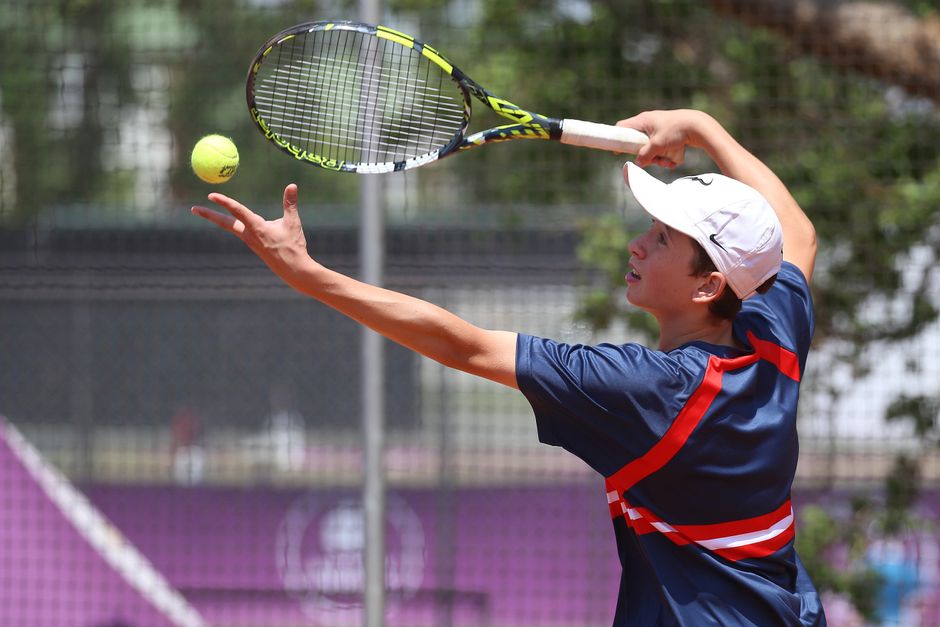
A well-hit kick serve does not skid through the service box like a flat serve. It climbs, curves through the air, and rises sharply after the bounce, often forcing the returner to strike above shoulder height. That combination of spin and height makes the kick serve one of tennis’s most useful second serves.
What is a kick serve?
A kick serve is a topspin-heavy tennis serve that also carries some sidespin. The racket brushes up and across the back of the ball rather than driving straight through it. This rotation pulls the ball down into the service box, allowing the server to swing with more margin over the net.
After landing, the ball pushes upward and usually moves sideways. A right-handed server’s kick serve commonly jumps to the returner’s backhand side in the deuce court, while the exact direction depends on the racket path, contact point, and amount of sidespin. Players may also use the serve down the middle or toward the body to disrupt an opponent’s positioning.
The term “kick” describes the bounce, not a separate type of ball. A serve with heavy topspin can kick high without moving far sideways, while a serve with more sidespin can curve and then skid away. Most effective kick serves combine both.
How the kick serve motion works
The ball toss is usually placed slightly behind and toward the non-dominant side of the server’s hitting shoulder. The exact location varies by player, but a toss that is too far in front often encourages a flatter swing, while one that drifts too far behind can place stress on the shoulder and lower back.
From the trophy position, the server drives upward with the legs and trunk while keeping the hitting arm relaxed. The racket approaches the ball from below. At contact, the racket travels up the back of the ball and brushes across it, creating topspin and sidespin. The swing should continue into a natural follow-through rather than stopping immediately after contact.
Many players misunderstand the phrase “brush up” and try to slice under the ball with the wrist. That usually produces weak contact and an unreliable serve. The spin should come from the full upward swing, shoulder rotation, forearm movement, and correct contact—not from forcing the wrist into an artificial flick.
Contact point, swing path, and ball placement
A kick serve is normally contacted high above the head, but slightly farther back than a flat serve. The server still needs to reach upward rather than lean dramatically away from the court. A balanced body position makes it easier to transfer energy into the ball and recover for the next shot.
For a dependable second serve, aim with height over the net and a generous target inside the service box. The ball should clear the net comfortably before dipping toward the intended landing area. Trying to make the ball bounce dramatically before developing reliable depth often leads to a serve that lands short and gives the returner an easy attack.
Serve direction also changes the tactical value of the kick. A wide kick serve can pull the returner away from the court, while a body kick serve jams the swing and creates a defensive reply. Against a player with a strong backhand, a high-bouncing serve to that side may still be effective, but placement should be adjusted if the opponent handles shoulder-height balls comfortably.
How to practise a kick serve
Start with the motion rather than full power. From a shortened service position, practise throwing the racket upward and across the ball while keeping the contact comfortable. The initial goal is a clean upward swing and visible ball rotation, not maximum speed.
Next, serve from behind the baseline at roughly half pace. Give yourself a large target in the service box and focus on a repeatable toss. If the ball consistently lands in the net, raise the contact point and add more net clearance. If it flies long, increase the upward swing and check that the racket is not driving too directly toward the target.
A useful progression is to alternate between a kick serve to the backhand, a body serve, and a wide serve. This connects spin production with real point construction. Practise the same routine before each attempt: settle the feet, establish the toss, accelerate upward, and recover into a ready position.
Common kick serve mistakes
- Tossing too far forward: This encourages a flat contact and removes the space needed for an upward racket path.
- Trying to create spin with the wrist alone: The result is often inconsistent contact and unnecessary arm tension.
- Dropping the elbow: A low elbow can make the swing cramped and reduce racket-head speed.
- Using too much sidespin: The ball may curve but fail to dip reliably into the service box.
- Chasing a huge bounce: A slower, short serve is easy to attack even if it jumps high.
- Ignoring the landing position: Falling backward or landing off balance makes the next shot harder.
Shoulder discomfort is a warning sign rather than a normal part of learning the serve. Reduce the intensity, review the motion with a qualified coach, and avoid repeatedly striking from an uncomfortable position. A technically sound kick serve should feel athletic and controlled, not forced.
Why the kick serve matters in a match
The kick serve gives the server a safer option on second serve points without surrendering all attacking potential. Its height over the net creates a larger margin, while the bounce can push the returner away from the ideal contact zone.
Its effectiveness depends on variation. A predictable kick serve to the same corner becomes easier to read, particularly at higher levels. Mixing height, direction, speed, and occasional flatter serves makes the returner hesitate and protects the server’s service games.
The best kick serve is not necessarily the one with the most visible spin. It is the one that lands consistently, reaches an uncomfortable height, and leaves the server in a strong position for the next ball.