Agility Drills for Athletes: Techniques, Progressions, and Training Tips
Learn how agility drills improve acceleration, deceleration, balance, and reaction speed, with practical exercises, progressions, training guidelines, and common mistakes to avoid.
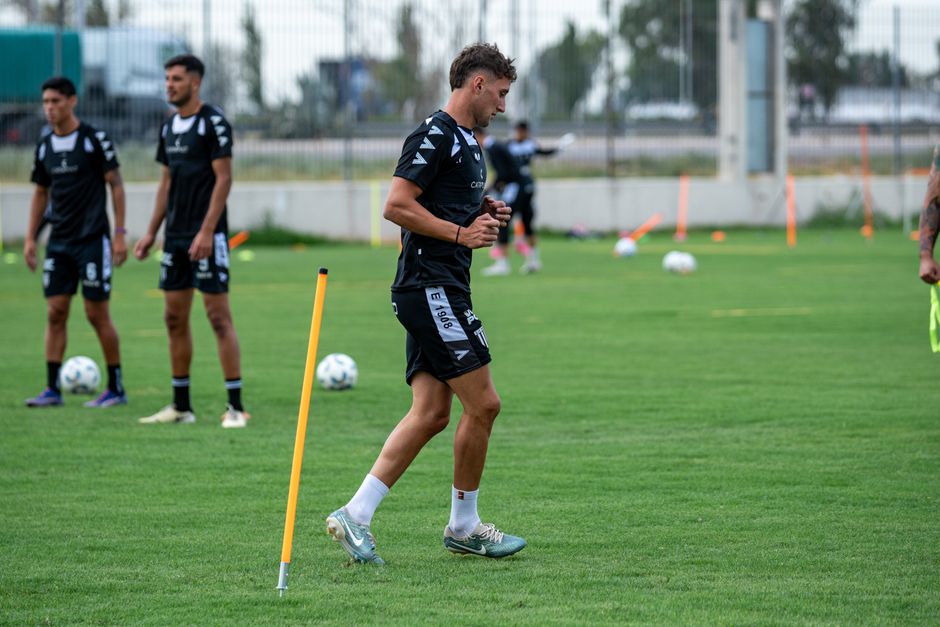
Agility is the ability to control and change body position quickly in response to a movement demand. It combines acceleration, deceleration, balance, coordination, reaction time, and the technical skill required to move efficiently. For athletes, effective agility training is more than completing a ladder pattern as fast as possible.
The most useful agility drills for athletes reflect the demands of their sport. A basketball player may need repeated lateral movements and rapid closeouts, while a football or soccer player may need to sprint, stop, cut, and react to an opponent. Training should therefore include both planned change-of-direction exercises and reactive drills in which the athlete responds to a visual or verbal signal.
What agility training develops
Agility and change-of-direction ability are related but not identical. In a planned change-of-direction drill, the athlete knows where to move next. Reactive agility adds an external cue, such as a coach’s pointing gesture, a ball movement, or an opponent’s action. The second quality places greater demands on perception, decision-making, and movement selection.
- Acceleration: Producing force quickly after a stationary start or while exiting a turn.
- Deceleration: Lowering speed under control before a cut, stop, or change of direction.
- Body control: Maintaining balance while the feet, hips, and torso reposition.
- Coordination: Timing the feet, arms, and trunk so movement remains efficient.
- Reaction speed: Recognising a cue and beginning the appropriate response.
- Repeated-effort ability: Performing several high-quality movements without a major loss of technique.
These qualities overlap with sprinting, strength, power, and sport skill. Agility exercises cannot fully replace strength training or high-speed running because each develops different physical and technical capacities.
Effective agility drills for athletes
Linear acceleration and controlled stopping
Place two cones 5 to 10 metres apart. Sprint from the first cone, slow down over the final few metres, and stop under control at the second cone. Walk back and repeat for four to six efforts. This simple drill teaches athletes to separate acceleration from braking instead of treating every repetition as an uncontrolled sprint.
During deceleration, the athlete should lower the centre of mass gradually, keep the feet under the body, and avoid allowing the knees to collapse inward. A long, upright stride directly into a sharp stop increases braking demands and often reduces control.
Five-ten-five shuttle
Set three lines or cones in a straight line, with the middle marker 5 yards from each outside marker. Start at the middle, sprint to one side, change direction, cross the full distance to the opposite side, and finish through the middle. This shuttle is useful for assessing acceleration, braking, lateral push-off, and the ability to re-accelerate after a turn.
Athletes should experiment with the foot position that allows them to turn efficiently without crossing the legs or taking extra steps. The best technique depends partly on the direction of travel, the athlete’s build, and the sport’s movement demands. Record times only when the same starting position, surface, footwear, and timing method are used.
Lateral shuffle and crossover drill
Place cones 3 to 5 metres apart. Shuffle laterally from one cone to the other, then return using a controlled crossover step. Keep the hips low enough to maintain balance, but do not force an excessively deep squat that restricts movement. The shuffle is appropriate for defensive positioning, while the crossover step can help athletes cover more ground when the movement is not limited to a strict side-on stance.
Do not allow the feet to collide or the torso to sway excessively. The athlete should push from the outside leg and keep the chest oriented toward the direction required by the sport.
T-drill
Arrange cones in a T shape: one starting cone, one cone 10 metres ahead, and two cones 5 metres apart to either side of the second cone. Sprint forward, shuffle across the top of the T, shuffle back through the centre, and run backward or turn to finish at the start, depending on the training objective.
The T-drill combines forward acceleration, lateral movement, and a change in body orientation. It is more demanding than a straight shuttle, so athletes should prioritise clean transitions before attempting maximal speed.
Box drill
Mark a square with sides of 4 to 6 metres. Move around the outside using a sequence of forward running, lateral shuffling, backward running, and a second lateral movement. Change the direction of travel between repetitions. The box drill develops movement versatility, but backward running should be performed at a controlled intensity until the athlete is comfortable seeing and managing the space behind them.
Reactive mirror drill
Pair two athletes in a marked area. One athlete leads with short lateral, forward, or backward movements while the other mirrors the action. Keep rounds short, usually 10 to 20 seconds, and change the leader after each effort. The defender should react to the leader’s hips and torso rather than guessing from a head fake.
This is a reactive agility exercise because the athlete must perceive movement, select a response, and execute it. It can be adapted to basketball, football, rugby, hockey, and court sports by adding a ball or restricting the movement to sport-specific positions.
Coach-call or light-reaction drill
Place four cones around the athlete. From an athletic stance, the athlete responds to a coach’s verbal call, hand signal, or light cue and accelerates to the indicated cone before returning to the centre. Use unpredictable cues and vary the distance so that the athlete cannot rely on a memorised sequence.
Because reaction drills include a decision component, they should not be judged solely by sprint time. A fast movement to the wrong cone is not a successful repetition. Accuracy, first-step direction, and the quality of the stop all matter.
How to perform agility exercises safely and effectively
Begin with a dynamic warm-up that raises body temperature and rehearses the movements required in the session. Light jogging, skips, progressive accelerations, lateral movement, ankle and hip mobility, and several submaximal decelerations are more relevant than long static stretching immediately before maximal changes of direction.
Teach the movement pattern at low speed before adding intensity. Athletes should learn to lower their centre of mass, position the foot to create a stable base, keep the knee aligned with the foot, and use the arms to support balance. The torso should lean in the direction of travel, but it should not fold sharply at the waist.
Keep high-intensity agility repetitions short enough that technique remains consistent. A typical session may use 3 to 6 sets of 2 to 5 repetitions for planned drills, with roughly 30 to 90 seconds of recovery between demanding efforts. Reactive drills may use 4 to 8 rounds of 10 to 20 seconds, followed by enough rest to maintain accurate decisions. These are starting ranges rather than universal rules; training age, sport calendar, surface, and injury history should influence the prescription.
Progressing agility training
Progression should increase one meaningful demand at a time. Start with a predictable pattern, then adjust distance, speed, angle, decision uncertainty, or sport-specific constraints. For example, an athlete might progress from a planned lateral shuffle to a coach-directed lateral movement, then to a reactive movement involving a ball or opponent.
- Learn the pattern: Use slower repetitions and clear cone locations.
- Increase movement quality: Add speed while maintaining controlled braking and stable alignment.
- Increase complexity: Introduce sharper angles, transitions between movement types, or a secondary task.
- Add perception: Use unpredictable visual, verbal, or opponent-based cues.
- Transfer to sport: Include a ball, defensive stance, passing option, tackle entry, or game-like starting position.
Changing direction at 45 degrees is generally less demanding than stopping and redirecting at 90 or 180 degrees. Athletes should earn sharper angles through competent deceleration rather than moving immediately to the most difficult variation.
Common mistakes in agility training
Prioritising speed over control
Running a drill quickly does not make it effective if the athlete takes unnecessary steps, loses balance, or cannot brake before the cone. Reduce the speed, widen the spacing, or use a larger turning radius until the movement is repeatable.
Using ladder drills as the entire programme
Agility ladders can train rhythm, foot placement, and coordination, particularly during warm-ups or beginner sessions. They do not automatically improve reactive agility or high-speed cutting. Ladder patterns should complement acceleration, deceleration, strength, and sport-specific decision-making rather than replace them.
Performing too many fatigued repetitions
Once an athlete’s posture, foot placement, or decision accuracy deteriorates, additional repetitions may reinforce poor movement. Conditioning work has a place, but it should be separated from technical agility practice when the goal is maximal quality.
Ignoring the surface and footwear
Hard, slippery, uneven, or overly soft surfaces change traction and braking demands. Begin on a predictable surface and use appropriate footwear. Sudden changes in training surface or volume can increase stress on the ankles, knees, calves, and hamstrings.
How often should athletes do agility drills?
Many athletes can perform one or two focused agility sessions per week, provided the work is coordinated with sprinting, strength training, practices, and competition. High-intensity change-of-direction training is usually best placed when the athlete is relatively fresh, such as early in a training session after the warm-up.
Players in a heavy competition period may need fewer repetitions and more emphasis on sharp, low-volume reactive work. Off-season athletes can gradually build volume and technical variety. Pain, persistent soreness, reduced coordination, or a noticeable drop in braking control are reasons to reduce the load and assess the cause rather than simply pushing through.
Measuring improvement
Use tests that match the quality being trained. A five-ten-five shuttle can indicate planned change-of-direction performance, while a reactive mirror drill or coach-call test provides information about perception and response. Measure more than one attempt, allow adequate recovery, and keep the setup consistent.
Timing data is useful, but it should be interpreted alongside technique. A small improvement in time is less meaningful if it comes with a poor stop, unstable knee position, or an increase in missed cues. Video from the front and side can reveal whether the athlete is braking too late, taking excessive steps, or failing to keep the trunk controlled.
Well-designed agility training combines efficient movement mechanics with appropriate intensity and decision-making. The strongest programme is not the one with the most complicated cone pattern; it is the one that prepares an athlete to accelerate, stop, redirect, and respond accurately under the conditions their sport creates.