What Is a Foul in Basketball? Rules, Types and Penalties Explained
A basketball foul is an illegal physical act or conduct violation. Learn the main types of fouls, common examples, and the penalties used in basketball.
A foul in basketball is an illegal action that breaks the rules, usually through unlawful physical contact with an opponent. Fouls can also involve unsportsmanlike behavior, technical misconduct, or illegal contact away from the ball.
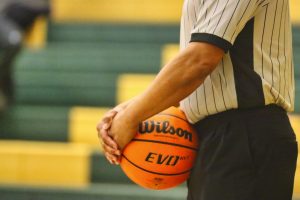
The referee decides whether a foul has occurred and signals the decision during play. Depending on the type of foul, the other team may receive possession, free throws, or both. Exact rules differ slightly between competitions such as FIBA basketball, the NBA, college basketball, and school leagues.
What counts as a foul in basketball?
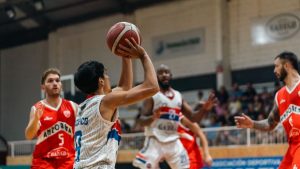
Most basketball fouls involve illegal contact. A player cannot gain an unfair advantage by holding, pushing, blocking, charging into, or striking an opponent. Contact is not automatically a foul; referees consider who caused the contact, whether a player had a legal position, and whether the contact affected the play.
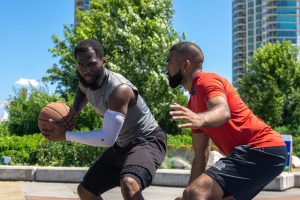
For example, a defender who moves into an opponent’s path too late may be called for a blocking foul. A ball handler who runs into a defender who has established a legal guarding position may commit an offensive foul, commonly called a charging foul.
Basketball also includes non-contact fouls. Arguing aggressively with an official, delaying the game, using disrespectful language, or committing an illegal substitution can result in a technical foul.
Main types of basketball fouls
Personal foul
A personal foul is illegal physical contact with an opponent. Common examples include pushing, holding, hand-checking, tripping, elbowing, and making illegal contact while defending a shot.
Personal fouls may be committed by offensive or defensive players. A defensive personal foul can lead to free throws if the player was shooting or if the team has reached the bonus. An offensive personal foul usually results in a change of possession rather than free throws.
Shooting foul
A shooting foul occurs when illegal contact affects a player who is attempting a field goal. The fouled player generally receives two free throws for a missed two-point attempt or three free throws for a missed three-point attempt. If the shot goes in, the basket counts and the player normally receives one additional free throw.
Blocking foul
A blocking foul is called when a defender is not legally positioned and impedes an opponent’s movement. The defender must usually establish a legal guarding position before the offensive player begins the relevant movement. Blocking calls are especially common on drives to the basket.
Charging or offensive foul
A charging foul happens when an offensive player causes illegal contact with a defender who has established a legal position. The most familiar example is a ball handler driving into a stationary defender. The offensive team loses possession, and the foul is recorded against the player who caused the contact.
Technical foul
A technical foul is generally given for misconduct that does not involve ordinary playing contact. Examples include excessive arguing, taunting, deliberately delaying a restart, hanging on the rim without a valid reason, or using inappropriate language. The opposing team receives penalty free throws under the competition’s rules, and play resumes according to the applicable procedure.
Unsportsmanlike or flagrant foul
An unsportsmanlike foul in FIBA basketball and a flagrant foul in the NBA involves excessive, hard, or unnecessary contact. The penalty can include free throws and possession for the opposing team. Serious conduct may also lead to ejection.
What happens after a foul?
The penalty depends on the foul, the location of the contact, the shooting action, and the number of team fouls. A non-shooting personal foul often gives the opponent a throw-in. A shooting foul normally produces free throws, while an offensive foul usually gives the ball to the other team.
Teams can also enter a penalty or bonus situation after committing a set number of team fouls in a quarter or half. In that situation, some non-shooting defensive fouls result in free throws. The threshold and penalty vary between leagues, so NBA and FIBA games should not be treated as identical.
How many fouls can a basketball player have?
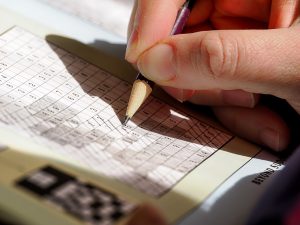
A player is disqualified after reaching the foul limit set by the competition. In the NBA, a player is generally disqualified after six personal fouls. In FIBA basketball, a player is disqualified after five personal fouls. College and youth competitions may use different limits.
Technical and other misconduct fouls may also affect a player’s ability to remain in the game. A player can be ejected before reaching the personal-foul limit for severe conduct or multiple technical penalties.
Foul versus violation in basketball
A foul usually involves illegal contact or misconduct, while a violation is a rule breach that does not normally involve contact. Traveling, carrying the ball, double dribbling, and stepping out of bounds are common violations. The usual penalty for a violation is a turnover and a throw-in for the other team, not free throws.
Understanding this distinction makes the referee’s signals easier to follow. A whistle for a traveling violation and a whistle for a personal foul may both stop play, but they lead to different penalties.