How to Jump Higher for Basketball: Strength, Plyometrics and Technique
Learn how to increase your vertical jump for basketball with practical strength exercises, plyometric drills, jumping technique, and recovery principles.
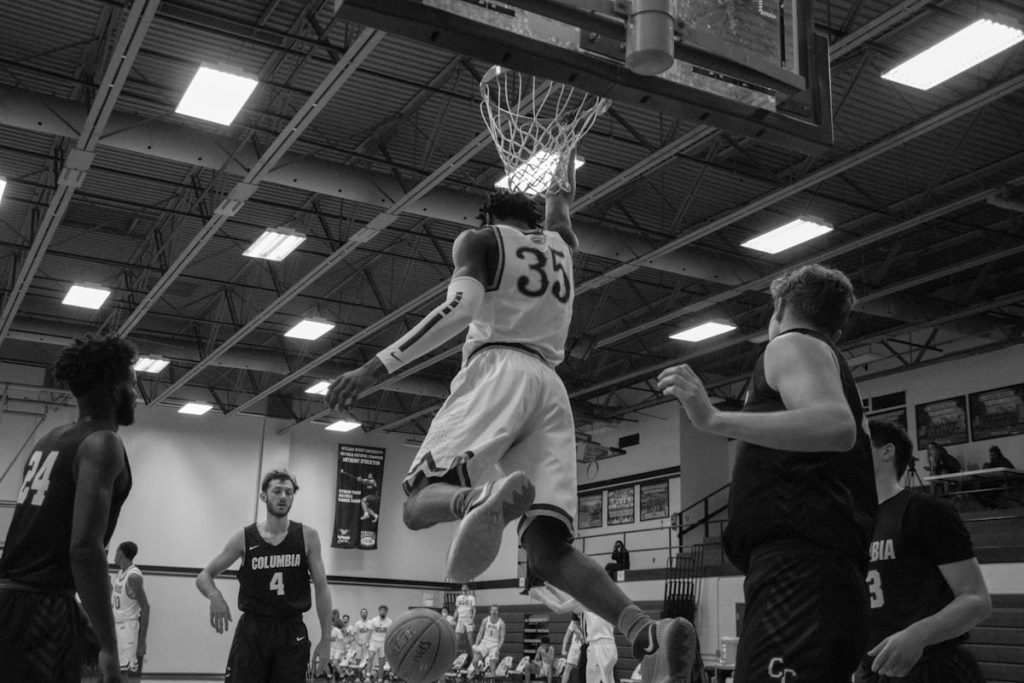
To jump higher for basketball, train the qualities that produce vertical force: lower-body strength, explosive power, elastic reactivity, and efficient jumping technique. A useful program combines strength exercises such as squats and split squats with carefully dosed plyometrics, sprint work, sound landing mechanics, and enough recovery.
Most players will not improve their vertical leap by simply jumping as often as possible. Progress comes from applying the right training stress, then allowing the muscles and nervous system to adapt.
Build the strength needed for a higher vertical jump
Strength gives you a larger base for producing force against the floor. Prioritize exercises that train the hips, thighs, calves, and core while keeping technique controlled.
- Back or front squats: Develop force through the hips and knees. Use a depth you can control without losing a stable spine or knee position.
- Romanian deadlifts: Strengthen the hamstrings and glutes, which help extend the hips during takeoff.
- Bulgarian split squats: Build single-leg strength and balance that transfer to running jumps and layups.
- Step-ups: Train force production from a position that resembles driving upward toward the basket.
- Calf raises: Strengthen the lower leg for the final part of the takeoff, although calf work should support rather than replace major lower-body lifts.
For general strength, two or three lower-body sessions per week can work well. Start with two to four sets of roughly four to eight controlled repetitions on major lifts. Add weight gradually only when every repetition remains technically sound. Basketball players should avoid turning every gym session into a maximal test, especially during a busy competition schedule.
Use plyometric exercises to improve explosive power
Plyometrics teach you to produce force quickly. They are especially useful for developing the stretch-shortening cycle used during rebounds, blocks, and explosive drives.
- Countermovement jumps: Dip quickly, swing the arms, and jump as high as possible while landing quietly.
- Approach jumps: Add a controlled run-up and practice the footwork used for a one-foot or two-foot takeoff.
- Squat jumps: Jump from a controlled position without allowing the knees to collapse inward.
- Broad jumps: Develop horizontal force and body control that can support acceleration on court.
- Pogo jumps: Use short, springy ankle contacts to improve lower-leg stiffness and reactivity.
- Low box jumps: Emphasize a powerful takeoff and safe landing rather than jumping onto a very high box.
Perform explosive drills while fresh, usually after a warm-up and before heavy strength work. Begin with around three to five sets of three to five quality jumps, resting long enough for power and landing control to remain high. Stop the session if jump height drops noticeably or landings become noisy and unstable.
Improve basketball jumping technique
Better mechanics can make your jump more effective without adding muscle. On a two-foot jump, lower your body with a quick, controlled dip, keep your feet stable, and coordinate the arm swing with the push through the floor. Avoid sinking so deeply that the movement becomes slow.
For a one-foot takeoff, build speed through the approach and place the final steps deliberately. A strong penultimate step helps lower your center of mass, while the last step should convert forward speed into upward lift. Practice both sides because basketball often forces players to finish from awkward angles.
Land with the feet approximately under the body, knees tracking in line with the toes, and the hips absorbing force. Do not repeatedly practice maximum jumps if you cannot land under control. Good landing mechanics reduce unnecessary stress on the knees and ankles.
Plan training, recovery and progress
A simple weekly structure might include two strength sessions, one or two short plyometric sessions, regular basketball practice, and at least one lower-impact recovery day. Do not place demanding jump training immediately after an exhausting game if your legs are still heavy.
Warm up with light movement, dynamic leg swings, ankle mobility, skipping, and a few progressive jumps. Static stretching is better placed after training or in a separate mobility session if it helps you maintain comfortable range of motion.
Sleep, food, and bodyweight also affect jumping performance. Aim for consistent sleep, eat enough protein and carbohydrates to support training, and avoid aggressive dieting while trying to improve power. Fatigue can reduce jump height and increase the risk of poor landings.
Measure progress under similar conditions every two to four weeks. Use the same shoes, surface, warm-up, and jump style, then record your best of several attempts rather than judging improvement from one random effort. If you have persistent knee, ankle, hip, or back pain, reduce impact training and seek assessment from a qualified sports clinician.