Strength Training for Athletes: Build Strength, Power and Durability
Learn how athletes can use strength training to improve force production, movement quality, power and resilience without letting gym work interfere with sport-specific performance.
Strength training for athletes is not simply about lifting the heaviest possible weight. The goal is to develop the strength, power, control and physical resilience needed for a specific sport while leaving enough energy for skill practice, competition and recovery.
A football player may need forceful acceleration and the ability to absorb contact. A basketball player may benefit from jumping power, single-leg control and deceleration strength. For a distance runner, the emphasis may be efficient force production, posture and resistance to fatigue. The best program reflects those demands rather than treating every athlete the same.
Why strength training matters for athletic performance
Stronger muscles can produce more force against the ground, an opponent or sporting equipment. That force can support sprinting, jumping, changing direction, throwing and maintaining body position. Strength work can also improve an athlete’s ability to control movement, particularly during landing, braking and rapid transitions.
Several qualities are closely connected but should not be confused:
- Maximum strength: the ability to produce high force in a demanding effort.
- Explosive strength: the ability to apply force quickly.
- Strength endurance: the ability to repeat forceful actions without a sharp drop in performance.
- Movement control: the ability to coordinate joints and muscles under load.
Athletic strength and conditioning programs often combine these qualities across a training week. Heavy resistance exercises may develop force capacity, while jumps, throws or fast lifts train the athlete to express force quickly. Mobility, conditioning and sport practice complete the picture.
Core exercises for an athletic strength program
Exercise selection should be based on movement patterns and sport demands. Free weights, machines, cables and bodyweight exercises can all be useful when they are performed safely and progressed appropriately.
Squat and split-stance exercises
Squats, split squats, step-ups and rear-foot-elevated split squats train the hips and legs while challenging trunk control. Single-leg variations are particularly useful for athletes whose sports involve running, cutting or jumping from one leg. They also expose differences in balance and strength between sides.
Hinge and posterior-chain exercises
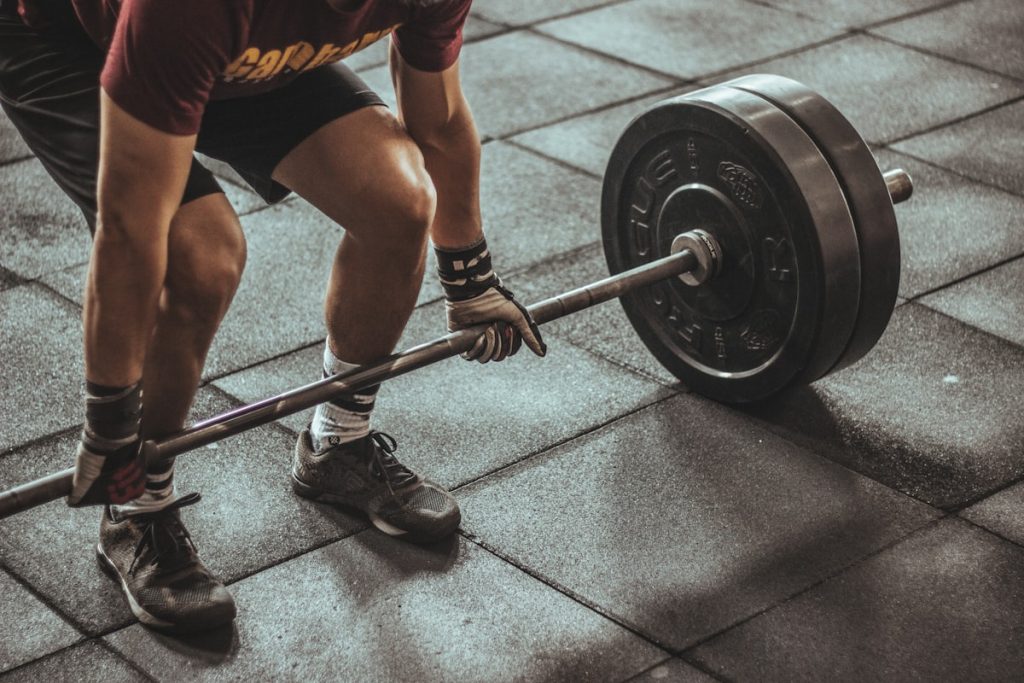
Deadlift variations, Romanian deadlifts, hip thrusts and controlled back-extension exercises train the glutes, hamstrings and lower back. These muscles contribute to sprinting, jumping and force absorption. Load should increase only when the athlete can maintain a stable spine and controlled hip movement.
Push, pull and carry exercises
Presses, rows, pull-ups, push-ups and loaded carries build upper-body strength and help athletes maintain effective positions during contact, grappling and overhead actions. A balanced program usually includes both pushing and pulling rather than focusing on chest or arm exercises alone.
Jumps, throws and other power exercises
Jump squats, medicine-ball throws and low-volume Olympic-lifting derivatives can train rapid force production. These movements work best when performed early in a session, while the athlete is fresh. Quality and speed matter more than fatigue, so sets should stop when movement becomes noticeably slower or less controlled.
How to structure strength training for athletes
A practical session often begins with a warm-up, followed by a technically demanding power exercise, a primary strength movement, supporting exercises and a short trunk or injury-prevention section. The order can change depending on the athlete’s experience and the main goal of the session.
For many athletes, two or three resistance sessions per week are enough to make progress, although the appropriate frequency depends on age, competition schedule, training history and sport demands. A typical session might include:
- Dynamic movement and sport-relevant preparation
- One explosive exercise with low repetitions
- One or two major strength exercises
- Accessory work for single-leg strength, pulling, pushing or the posterior chain
- Trunk stability, mobility or targeted prehabilitation
Training volume should be coordinated with running, practice and competition. A hard lower-body lifting session immediately before a demanding match or sprint workout can reduce quality and increase fatigue. Coaches often place the most demanding work after a rest day or alongside a high-intensity sport session, allowing easier days to remain genuinely easy.
Sets, repetitions and progressive overload
There is no single repetition range for athletic development. Heavier sets with fewer repetitions can support maximum strength, while moderate-load sets may build muscle and technical consistency. Explosive exercises generally use low repetitions so that speed and coordination remain high.
Progressive overload does not always mean adding weight. An athlete can progress by completing an extra repetition, using better technique, increasing range of motion, adding a set, reducing unnecessary rest or performing the same load at a faster controlled speed. The safest progression is the one that improves training quality without disrupting sport performance.
Keep a simple record of exercises, loads, repetitions, perceived effort and any pain or unusual fatigue. This makes it easier to adjust training before a small problem becomes a larger one.
Strength training during the competition season
In-season lifting should preserve useful strength and power without creating excessive soreness. Athletes often need less volume than they used during an off-season strength phase, while maintaining a reasonable level of intensity and movement quality.
Sessions may become shorter, with fewer accessory exercises and more attention to the movements that have the greatest transfer to the sport. The training plan should also account for travel, match congestion, sleep, nutrition and the athlete’s current injury status. A player who has already completed several demanding practices may need a reduced gym session rather than another full workout.
Common mistakes in athletic strength training
- Copying a bodybuilding routine: High muscle-building volume may interfere with speed, skill work and recovery when applied without modification.
- Training to failure too often: Constantly reaching muscular failure can create fatigue that has little benefit for power or sport practice.
- Ignoring technique: Load should support good movement, not force an athlete into positions they cannot control.
- Adding power work when tired: Jumps and throws are most useful when performed with intent and sound mechanics.
- Neglecting single-leg and trunk work: Many sports require athletes to produce and absorb force in offset or unstable positions.
- Changing exercises constantly: Athletes need enough consistency to learn movements and measure progress.
Safety, recovery and individual adjustments
Strength training should be challenging but not painful. Persistent joint pain, altered movement, swelling or symptoms that worsen during a session should be assessed by a qualified medical or rehabilitation professional. Young athletes can perform resistance training, but they need age-appropriate instruction, supervision and gradual progression.
Recovery supports adaptation. Adequate food, hydration, sleep and rest between demanding sessions matter as much as the exercise list. A well-designed program may need to change during illness, rapid growth, injury rehabilitation or a congested competition period.
The most effective athletic strength program is the one the athlete can perform consistently, recover from and connect to the demands of the sport. Build a foundation of controlled strength first, add speed and power with care, and adjust the workload as performance and competition requirements change.