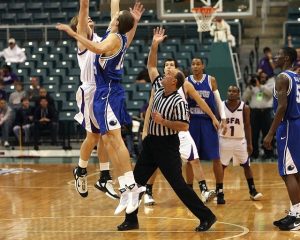
Basketball Positions Explained: Roles, Numbers and Responsibilities
Learn what each basketball position does, from point guard to center, and how modern players combine roles in positionless offenses and defenses.
Basketball positions describe the main responsibilities players usually have on the court. The traditional lineup uses five roles: point guard, shooting guard, small forward, power forward and center. These are also known as positions one through five.
Modern basketball is less rigid than the traditional system. A guard may bring the ball up, a forward may create shots and a center may shoot three-pointers. Even so, understanding the five positions makes offensive spacing, defensive assignments and player roles much easier to follow.
The five basketball positions and their roles
1. Point guard
The point guard is often the primary ball-handler and organizer. This player starts many possessions, calls or recognizes the offense and looks for the best passing option. Point guards commonly direct pick-and-rolls, control the pace and create shots for teammates.
A good point guard needs strong ball-handling, court vision, passing accuracy and decision-making. Scoring is also valuable, especially when defenders go under screens or leave the guard open. On defense, the point guard often begins by defending the opposing team’s main ball-handler.
2. Shooting guard
The shooting guard traditionally provides perimeter scoring. This position often includes catch-and-shoot specialists, players who use screens to get open and guards who can attack closeouts with a drive.
Shooting guards may also handle the ball and create offense. The most useful two-guards can defend multiple backcourt players, move without the ball and make quick decisions after receiving a pass. Their responsibilities often overlap with those of the point guard.
3. Small forward
The small forward is usually a versatile wing player. Small forwards may score from outside, attack the basket, defend wings and rebound from the perimeter. Their size and mobility allow them to contribute in several areas without being limited to one task.
Many small forwards are effective in transition because they can run the floor and finish at the rim. They may also defend the opponent’s best wing scorer or switch onto larger forwards when the defensive system requires it.
4. Power forward
The power forward traditionally plays near the basket, sets screens, rebounds and scores from mid-range or close to the rim. In older systems, this position was often associated with physical interior play.
Today, power forwards frequently stretch the floor by shooting three-pointers. A stretch four can pull a defender away from the paint, creating driving lanes for guards. Other power forwards operate as screeners, short-roll passers or mobile defenders who can switch onto smaller players.
5. Center
The center is generally the tallest player in the lineup and works around the basket. Common center responsibilities include protecting the rim, securing defensive rebounds, setting screens, finishing inside and defending post players.
Centers have become more varied. A traditional rim-running center focuses on screens, rolls and finishes at the basket, while a stretch center can shoot from the perimeter. Some centers also pass from the high post or serve as the main playmaker from the elbow.
How basketball positions work on offense
Offensive positions are mainly about spacing, ball movement and creating advantages rather than standing in fixed spots. A typical half-court offense may place a point guard at the top, two wings near the sides and two big players near the lane or baseline. Players then cut, screen, hand off and exchange positions.
Ball-handler and playmaker roles
The primary ball-handler starts many actions, but the responsibility can shift during a possession. A shooting guard or forward may bring the ball up, while a center may initiate a handoff or pass from the high post.
Secondary playmakers are valuable because they prevent the offense from depending on one creator. They can attack a closeout, make the next pass, run a pick-and-roll or find a cutter after the defense rotates.
Wings and perimeter spacing
Wings usually operate on the perimeter and along the baseline. Their job may include standing in a corner to maintain spacing, cutting behind a defender, setting a screen or attacking the basket after receiving the ball.
Good spacing gives drivers room to reach the rim and makes help defense more difficult. A player who cannot shoot may need to compensate with cutting, screening or offensive rebounding so that the defense cannot ignore them.
Bigs, screens and interior play
Power forwards and centers often create advantages by setting solid screens. In a pick-and-roll, the screener can roll toward the basket, pop to the perimeter or pass after receiving the ball in space.
Big players also affect possessions without touching the ball. Their positioning can open a driving lane, occupy a rim protector or create a rebounding advantage. Their ability to finish inside and pass against defensive rotations determines how much pressure they place on the defense.
Defensive positions and matchups
Defensive assignments do not always match offensive positions. A team may ask a strong wing to defend a point guard, or a mobile center to switch onto a guard for a short period. Coaches choose matchups based on size, speed, shooting ability and defensive strength.
- Point-of-attack defender: Pressures the player with the ball and tries to disrupt the first action.
- Wing defender: Guards perimeter scorers, closes out under control and helps on drives.
- Help defender: Rotates toward the paint, tags a rolling player and recovers to an outside shooter.
- Rim protector: Challenges shots near the basket and deters drives before they reach the rim.
- Defensive rebounder: Finishes the possession by securing the ball after a missed shot.
Defensive systems can also change a player’s job. In man-to-man defense, each player usually has a primary matchup. In a zone defense, players guard areas and must communicate when opponents cut, screen or move the ball.
Traditional positions versus positionless basketball
Positionless basketball does not mean positions have disappeared. It means players are expected to perform several functions instead of being restricted to a single label. A lineup might include multiple ball-handlers, several switchable defenders or five players capable of shooting from outside.
A modern center may bring the ball up and pass like a guard. A forward may run the offense, while a point guard may defend a larger player. Coaches often describe these lineups by their skills, such as a small-ball lineup, a five-out lineup or a switch-heavy defense.
The most useful way to evaluate a player is to ask what they can do: Can they create a shot, defend in space, protect the rim, rebound, pass, screen or stretch the floor? The position name provides context, but the player’s actual responsibilities matter more.
How to identify a player’s position
Height can offer a clue, but it is not enough. Watch where the player starts possessions, whom they defend and what they do when they do not have the ball.
- A player who regularly organizes the offense is likely functioning as a point guard or lead guard.
- A perimeter scorer who works off screens and defends guards often plays shooting guard.
- A versatile wing who guards several positions is commonly a small forward.
- A forward who screens, rebounds and stretches the floor may be a modern power forward.
- A player who protects the rim, controls the defensive glass and finishes inside is usually functioning as a center.
Lineups can also use hybrid labels such as combo guard, point forward, wing, stretch four or small-ball five. These terms describe a player’s blend of skills rather than a fixed place on the court.
Why basketball positions still matter
Positions remain useful for explaining team structure. They show who is expected to initiate the offense, provide perimeter shooting, create defensive pressure, protect the paint and rebound. They also help coaches balance a lineup so that the team has enough size, ball-handling, shooting and defensive coverage.
At the same time, strong teams give players overlapping responsibilities. The best lineup may not have one specialist at each traditional position. It may instead have five players who can pass, defend, move without the ball and make the right decision when the defense changes.